A just transition for renewables: Why COP30 must put people before power
Across the world, people hosting renewable energy projects are seeing few rewards. Advocates say a Belém Action Mechanism could make the green transition fairer
A woman stands beside a solar panel installation in the Tres Hermanos fishing community in the Bolivian Amazon. (Image: Freddy Barragán García/Practical Action Bolivia, 2025)
From Kenya to Chile, communities are pushing back against renewable energy projects that promise green progress but deliver few direct benefits. Electricity is often channelled to power private utilities, while not delivering on promises of new local jobs. The result is growing public distrust that could derail the energy transition itself.
In Kenya, poor consultation with local communities led to a landmark ruling that revoked the licence for a proposed geothermal project. In India, a 1-gigawatt (GW) solar project funded by the Asian Development Bank was cancelled in 2025 after protests by tribal communities, who reported a lack of proper consultation and faced the displacement of 20,000 people.
In Chile, wind farms built for green hydrogen exports are meeting resistance as residents say such projects threaten ecosystems and livelihoods. In the Philippines, the Tumandok Indigenous people oppose a mega-hydropower project. They say the project risks flooding their ancestral lands and sacred sites, and has violated their right to free, prior and informed consent. And in Pakistan, the 4-GW Dasu Hydropower Project has already uprooted more than 7,000 people, leaving 34 villages abandoned.
Advertisement
With clean energy mega-projects becoming the norm, as shown in a recent report by CAN International, such conflicts are only likely to increase in number unless things change.
Growth without justice
Despite record expansion, deployment of renewables remains far too slow and far too unequal. Many developing countries are constrained by debt and limited fiscal space, while rich nations continue to over-consume energy.
Even where renewables are rising, the benefits often flow to foreign corporations. And power fed back into national grids frequently enriches independent power producers while leaving consumers with high bills.
Egypt illustrates the dilemma. To meet its green hydrogen targets and bring in hard currency to service its debt, the country needs to install 41 GW of renewable capacity by 2030 and 114 GW by 2040 – five to fifteen times its current renewable capacity. Four percent of Egypt’s land has been designated for green hydrogen production, even as droughts and water scarcity worsen.
Under the EU-led Global Gateway initiative, some of this electricity could be exported to Europe through the GREGY interconnector. Meanwhile, Egypt is becoming a hub for ‘green’ data centres, even as rural areas and public healthcare facilities face rolling blackouts.
“Some of the world’s largest solar projects are in Morocco and Egypt – but they’re built mainly for export, not to meet domestic needs,” says Mohamed Kamal, executive director of Greenish, an Egypt-based civil society organisation. “The real challenge now is governance: how to ensure that new investments serve local people first, especially in regions that still lack the infrastructure for consistent energy supply.”
Advertisement
“As we build the renewable energy economy, we must not repeat the mistakes of the fossil fuel era,” he adds. “We cannot look to those failed models for inspiration or replicate their structures of control within the renewable energy value chain.”
A solar panel installation powering irrigation systems in Icrana, Huarina Municipality, near Lake Titicaca, Bolivia. The project supports off-grid farming communities to improve food security amid increasingly frequent droughts. (Image: Freddy Barragán García/Practical Action Bolivia, 2025)
A solar panel installation powering irrigation systems in Icrana, Huarina Municipality, near Lake Titicaca, Bolivia. The project supports off-grid farming communities to improve food security amid increasingly frequent droughts. (Image: Freddy Barragán García/Practical Action Bolivia, 2025)
A just transition mechanism for renewables at COP30
At COP30 in Belém, civil society networks including Climate Action Network are calling for the Belém Action Mechanism (BAM) for a Just Transition under the UN climate process to make a fair transition real.
BAM would bring together the many initiatives now working in isolation, from practitioner alliances to community projects or programmes led by intergovernmental organisations. This will help countries change course by removing structural barriers such as debt, unfair trade rules and limited technology transfer that keep developing countries at the bottom of renewable supply chains.
It will also unlock public finance to support worker upskilling, green industrial policies and inclusive ownership models and distributed renewable systems. Furthermore, it can create structured dialogue between governments, workers and communities to share best practices, strengthen participation and scale up solutions that deliver.
Such a mechanism could help countries develop not only more renewables, but better ones – people-centred, community-led and domestically owned.
Restoring trust, accelerating transition
Globally, the world is not on track to triple renewable capacity by 2030 – as agreed at COP28 – and fossil fuel emissions remain stubbornly high. Unless the renewable transition becomes fairer, it will also become slower.
From rooftop-solar schemes in India that cut bills and spare land, to initiatives in the Philippines, where a coalition of civil society, faith-based and industry groups has launched a “Ten Million Solar Rooftops” challenge, examples are emerging across the world of what fair, people-centred renewables can look like.
In Canada and Australia, projects led by communities or Indigenous people are showing the same spirit. In Western Australia, the Aalga Goorlil “Sun Turtle” Community Power Project – led by the Djarindjin Aboriginal Corporation – aims to reduce the community’s reliance on non-renewable energy and has already become a symbol of self-determination since the community’s official recognition last year. In Bolivia, solar power is strengthening food and economic security for local farming and fishing communities.
A global just transition mechanism could scale up such efforts, restoring trust and placing equity at the centre of decarbonisation and access to quality energy for everyone.
“Justice isn’t an add-on,” says Mohamed Kamal. “It’s the condition for progress. Without it, the transition won’t hold.” As negotiators prepare for COP30, the question is not only how fast the world can build renewables, but who they are built for and how.
Our unprecedented reporting provides experts and professionals globally with the analysis and insight they need to navigate the most important climate issues.
Trusted by the UN, World Bank, and governments around the world, sign up today and see why our award-winning coverage has been considered the authority for almost 15 years.
Essential
£0
A few top stories each week alongside our Climate Weekly newsletter.
Across Asia, the installation of early warning systems, alongside community involvement, is now viewed as a key response to the ever-present threat of climate disasters.
COP30’s headline win – the creation of the first global Just Transition mechanism – did not materialise overnight. Born out of years of work, it flourished during two weeks of civil society alignment in one of the few negotiating tracks that gained momentum
Spain has made good progress in supporting workers to transition away from fossil fuels. But trade unions are pushing for stronger efforts to renew rural life
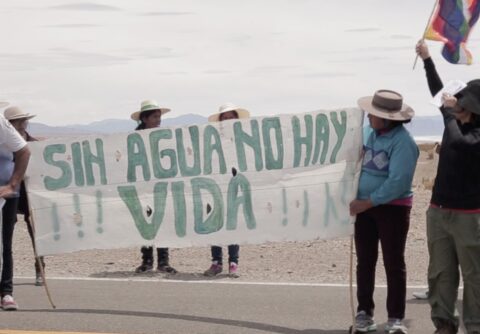
Rich in lithium but poor in water, traditional Andean communities want the world to recognise the pitfalls of surging demand for minerals vital to the global energy transition
As importers face new costs under the Carbon Border Adjustment Mechanism, many are finding the biggest savings do not necessarily come from swapping to cleaner production
As the Iran war upends global energy markets, governments and consumers are cutting back – potentially locking in demand reductions that could lower the outlook for planet-heating emissions
Oil and gas blocks overlap with a fifth of forests in the Amazon, Congo Basin and SE Asia – policies are needed to transition away from fossil fuels and halt deforestation together
New UN-supported forum should challenge a global system that leaves many Global South nations with zero fiscal breathing space to navigate climate disasters and economic crises
Amid aid cuts, donor governments pledge less nature and climate funding to the Global Environment Facility (GEF), with the four-year package to be finalised in late May
Meeting the goal requires political will and a pathway that brings together efforts and drives implementation. An international roadmap can deliver this
Stay ahead with our unrivalled coverage
We provide experts and professionals around the world with the analysis and insight they need to navigate the biggest climate issues and negotiations.
To provide the best experiences, we use technologies like cookies to store and/or access device information. Consenting to these technologies will allow us to process data such as browsing behavior or unique IDs on this site. Not consenting or withdrawing consent, may adversely affect certain features and functions.
Functional
Always active
The technical storage or access is strictly necessary for the legitimate purpose of enabling the use of a specific service explicitly requested by the subscriber or user, or for the sole purpose of carrying out the transmission of a communication over an electronic communications network.
Preferences
The technical storage or access is necessary for the legitimate purpose of storing preferences that are not requested by the subscriber or user.
Statistics
The technical storage or access that is used exclusively for statistical purposes.The technical storage or access that is used exclusively for anonymous statistical purposes. Without a subpoena, voluntary compliance on the part of your Internet Service Provider, or additional records from a third party, information stored or retrieved for this purpose alone cannot usually be used to identify you.
Marketing
The technical storage or access is required to create user profiles to send advertising, or to track the user on a website or across several websites for similar marketing purposes.