Climate change has a habit of exploiting weaknesses. Existing problems are made worse and new ones are created in its wake.
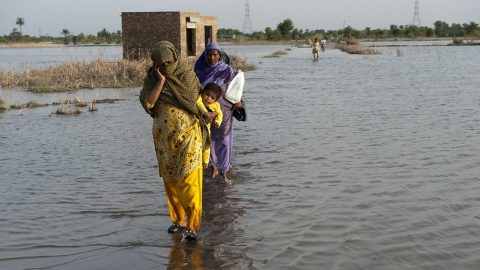
How the climate crisis unequally impacts women is well-documented – but no less shocking. According to the UN, women and girls are estimated to make up around 80% of the people displaced due to climate change. This often forces them into extreme poverty and a heightened threat of violence.
Researchers attribute this disparity to a range of factors. Women are typically among the majority of the world’s poor, with fewer decision-making powers and a greater reliance on their country’s natural resources for survival. The crisis brings deeply entrenched inequalities to the surface and makes them hard to ignore.
Advertisement
This year’s International Women’s Day takes up the issue with the theme of “For All Women and Girls: Rights. Equality. Empowerment”.
Many women in Peru, for example, are experiencing these inequalities firsthand as climate change forces them to adapt.
But they aren’t alone in the effort. Profonanpe, the Peruvian environmental fund, was established in 1992, and is at the forefront of conserving the country’s globally significant biodiversity.
As part of this work, the fund empowers women to take a central role in their future, by moving into new roles in their communities, and contributing vital local knowledge to adaptation responses.
Business leaders
Profonanpe is spearheading two climate projects, financed by the Adaptation Fund, and women’s rights are a main priority throughout. One of these initiatives, located in the Andes, is about to get underway, while another on the coast has recently reached completion.
Both present different challenges. In the mountains, women often participate in the same activities as men. The new project will increase adaptive capacity and reduce the vulnerability of forests, grasslands and wetlands using an inclusive approach that combines ecosystem monitoring and resilience-building.
Along the coast it is uncommon to find women who work on fishing boats, but they play a crucial role in processing and marketing the day’s catch. Acknowledging this fact and finding alternative lines of work was a key consideration.
Peru’s significant fishing industry accounts for an estimated 10% of all fish captured around the world, but as fish stocks plummet, local communities need to diversify fast. Profonanpe’s approach was to help women create their own community associations, and run their own businesses.
New industries popped up using fish waste as a biofertiliser, aquaponic plants were created to cultivate fish stocks, and eco-tourism was promoted in marine protected areas.
José Zavala, a general coordinator on the project, explained: “The work of women within the productive chain of artisanal fishing was invisible for a long time. That is why it was decided, in a participatory way, to include activities exclusively for them and that would adapt to their way of life.”
Gloria Tarazona, president of the Women’s Association of Aquaponics in Huacho, said many women in Peru – particularly mothers of young children – can’t get paid work because they have to take care of their family. The project changes this dynamic by allowing them to join part-time with manageable schedules. “We are generating food and jobs for many people,” Tarazona said.
“The food is natural and organic, and little by little with climate change and pollution these products are becoming more necessary. The positive change that I’ve seen in all the women of the project is that they like what they have learned. I always tell them they have to continue forward because this is a project of the future,” Tarazona added.
Gloria Tarazona, president of the Women’s Association of Aquaponics in Huacho
Gloria Tarazona, president of the Women’s Association of Aquaponics in Huacho
Inspiring change
Claudia Godfrey, Profonanpe’s director of innovation and strategic management, told Climate Home how women’s stories from the project are a strong motivator.
“Daughters have seen the change in their mothers, and felt inspired. They realise that their mothers can be leaders and entrepreneurs,” she said.
Advertisement
“Seeing younger generations inspired by their mothers reminds us how important it is to include women in climate adaptation.”
Strong gender policies, including setting high targets for female leadership on projects, have helped embed women’s rights in other organisations. These policies ensure fewer women are overlooked for leadership positions.
The Adaptation Fund’s own social and gender policies are aimed at empowering women and marginalised groups. They do this by providing equitable access to resources and livelihoods, and inclusive decision-making.
“It’s moving to see how women have grown in confidence and recognition within their communities. Many of them have told us that they now have a voice in decision-making and how their lives have changed. Not just economically, but socially,” Godfrey added.
She added that climate change is increasing awareness of women’s roles and pushing them to have a stronger voice on the issue. The crisis has been a catalyst for changing how women within the environmental sector are viewed.
“In Peru, there has been great progress in recognising women’s role in environmental management. But there is still a lot to do,” Godfrey said.
Women leaders at the closing of the marine coastal adaptation project.
Women leaders at the closing of the marine coastal adaptation project.
Tracking progress
Mikko Ollikainen, head of the Adaptation Fund (AF), said the fund’s gender policies and monitoring approaches are continually being enhanced.
“For me, this resonates deeply with the fund’s ongoing efforts to promote gender equality and empower women and girls.”
“Women are a vulnerable group at risk of being overlooked in the design and implementation of adaptation projects. We need to actively ensure that women’s specific adaptation needs are duly considered. This in turn improves adaptation work on the ground,” he added.
“Lessons learned about considering the needs of women and girls will help us address the needs of other vulnerable groups.”
“We are continuously tracking progress on our gender work. We will continue to increase gender responsiveness so no one is left behind.”
Adam Wentworth is a freelance writer based in Brighton, UK.
Our unprecedented reporting provides experts and professionals globally with the analysis and insight they need to navigate the most important climate issues.
Trusted by the UN, World Bank, and governments around the world, sign up today and see why our award-winning coverage has been considered the authority for almost 15 years.
Essential
£0
A few top stories each week alongside our Climate Weekly newsletter.
Across Asia, the installation of early warning systems, alongside community involvement, is now viewed as a key response to the ever-present threat of climate disasters.
COP30’s headline win – the creation of the first global Just Transition mechanism – did not materialise overnight. Born out of years of work, it flourished during two weeks of civil society alignment in one of the few negotiating tracks that gained momentum
Spain has made good progress in supporting workers to transition away from fossil fuels. But trade unions are pushing for stronger efforts to renew rural life
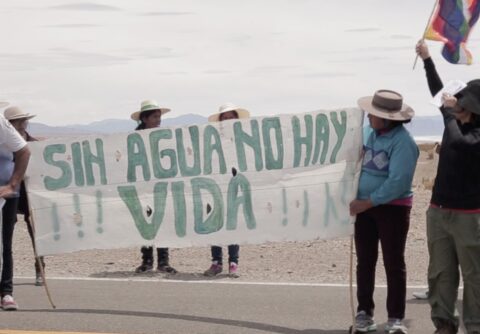
Rich in lithium but poor in water, traditional Andean communities want the world to recognise the pitfalls of surging demand for minerals vital to the global energy transition
Across the world, people hosting renewable energy projects are seeing few rewards. Advocates say a Belém Action Mechanism could make the green transition fairer
As importers face new costs under the Carbon Border Adjustment Mechanism, many are finding the biggest savings do not necessarily come from swapping to cleaner production
As the Iran war upends global energy markets, governments and consumers are cutting back – potentially locking in demand reductions that could lower the outlook for planet-heating emissions
Oil and gas blocks overlap with a fifth of forests in the Amazon, Congo Basin and SE Asia – policies are needed to transition away from fossil fuels and halt deforestation together
New UN-supported forum should challenge a global system that leaves many Global South nations with zero fiscal breathing space to navigate climate disasters and economic crises
Amid aid cuts, donor governments pledge less nature and climate funding to the Global Environment Facility (GEF), with the four-year package to be finalised in late May
Meeting the goal requires political will and a pathway that brings together efforts and drives implementation. An international roadmap can deliver this
Stay ahead with our unrivalled coverage
We provide experts and professionals around the world with the analysis and insight they need to navigate the biggest climate issues and negotiations.
To provide the best experiences, we use technologies like cookies to store and/or access device information. Consenting to these technologies will allow us to process data such as browsing behavior or unique IDs on this site. Not consenting or withdrawing consent, may adversely affect certain features and functions.
Functional
Always active
The technical storage or access is strictly necessary for the legitimate purpose of enabling the use of a specific service explicitly requested by the subscriber or user, or for the sole purpose of carrying out the transmission of a communication over an electronic communications network.
Preferences
The technical storage or access is necessary for the legitimate purpose of storing preferences that are not requested by the subscriber or user.
Statistics
The technical storage or access that is used exclusively for statistical purposes.The technical storage or access that is used exclusively for anonymous statistical purposes. Without a subpoena, voluntary compliance on the part of your Internet Service Provider, or additional records from a third party, information stored or retrieved for this purpose alone cannot usually be used to identify you.
Marketing
The technical storage or access is required to create user profiles to send advertising, or to track the user on a website or across several websites for similar marketing purposes.