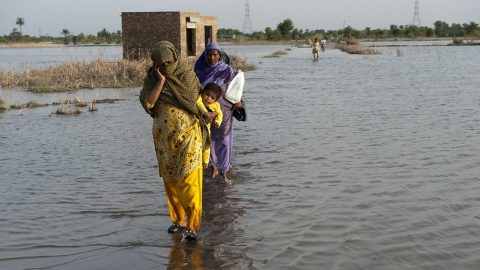
Farming communities in El Salvador are reaping the benefits of working with nature by planting trees, harvesting rainwater and other ecological practices
Rugged terrain in Ahuachapán department. El Salvador's mountainous landscape often makes crop farming a challenge. (Photo credit: Unsplash)
The 55th anniversary of Earth Day comes at a perilous time for the planet. The world faces a series of environmental threats unprecedented in the six decades since the event began.
From extreme weather to species decline, deforestation to water insecurity, these risks are growing in scale and severity as the planet heats up and the climate changes.
Advertisement
Many of these threats are related and the need to tackle them together is widely recognised by scientists and policymakers. Increasing forest cover, for example, can support stable rainfall and reduce carbon emissions.
There are multiple examples around the world of people putting these ideas into practice. More and more communities are looking to “nature-based solutions” to tackle new threats to their livelihood and local environment.
One such story of resilience is taking place in the South Ahuachapán region of El Salvador.
El Salvador is a small and densely populated country in Central America, equivalent to the size of the US state of New Jersey. Its small area belies a wide range of climatic conditions with droughts, floods, and soil erosion commonplace. Its two mountain ranges mean much of the agricultural land exists on slopes prone to landslides.
South Ahuachapán is a dry, coastal territory around 90 kilometres from the capital, San Salvador. The UN Development Programme (UNDP) is implementing a project in this region – financed by the Adaptation Fund – to reduce the vulnerability of local communities to climate shocks. It is seeking to achieve this through land restoration, efficient water management, and climate-smart agriculture practices.
The project has a target to restore 3,865 hectares of degraded land, in large part by introducing agroforestry techniques. This includes integrating essential crops such as maize with native tree-planting. Doing so provides shade to the crops, improves soil health, and protects against landslides.
“Many of the beneficiaries are smallholder farmers with limited formal education and few prior opportunities for technical training,” Ryna Ávila, a UNDP development specialist based in El Salvador, told Climate Home News.
“Through the project, they received sustained specialised technical assistance, field-based training, and direct support in the adoption of agro-ecological practices.”
She explained that communities have also been equipped with water reservoirs, soil conservation structures, and early warning capacities, which protects against climate shocks such as El Niño-induced droughts and unseasonal storms.
‘They told me I was crazy’
“I used to live on day labour. It was desolate; there was nothing on my plot. I felt depressed because I didn’t know what to do,” Ricardo García, a subsistence farmer in the San Francisco Menendez municipality, told project partners. “The drought would come, and I would lose everything.”
His plot is one which has benefited from sustainable practices – and he now cultivates 12 different crops that can withstand harsh weather conditions and offers him options should some crops fail.
“I never thought about how I was working the soil, and look where I am now. When I planted these coconuts, they told me I was crazy,” he said.
Ávila explains that through the project, “the introduction of diversified livelihoods, such as climate-resilient crops and improved pasture systems, is reducing dependence on traditional monocultures.”
“These shifts are not only climate-smart but economically beneficial, helping families generate income while preserving ecosystem services,” she added. As a result of these interventions, the local population is becoming more prepared to face climate stresses while quality of life has improved.
Planting climate-resilient crops, such as zapote, was a key activity. (Photo credit: UNDP)
Planting climate-resilient crops, such as zapote, was a key activity. (Photo credit: UNDP)
Root cause
One of the main aims of the project is to promote efficient water use during times of drought, primarily through improved climate and hydrological data collection. Closely monitoring the quantity and quality of water availability – through local means and satellite data – has provided farmers with more options on how to adapt.
Data was also collected on the effectiveness of these interventions. One climate-smart technique used was drip irrigation – a method designed to drastically reduce water consumption by directly targeting a plant’s “root zone” with small amounts of water.
The results impressed Mevin Pérez, a local farmer in the area. “We have irrigation systems that help us maintain water and give life to the plants,” he told UNDP.
“As a family, we feel grateful because we all work to take care of the plants. It used to be difficult for us to fetch water; now we no longer spend half an hour fetching a jug of water,” he added.
Increasing local knowledge of these techniques – and the data sitting behind it – was seen by project managers as crucial to building climate resilience.
An example of drip irrigation being used on crops in South Ahuachapán (Photo credit: UNDP)
An example of drip irrigation being used on crops in South Ahuachapán (Photo credit: UNDP)
Paying dividends
Over 30,000 people living in rural San Francisco Menendez could benefit from conservation techniques which work with nature instead of against it.
The project – now in its final stages – could have a lasting impact in the region and provide a model for other parts of El Salvador experiencing climate stress. Researchers believe examples like this could be replicated on a much wider scale, providing useful data on how to implement nature-based solutions in agricultural settings elsewhere in the world. And these themes are expected to be discussed and promoted at the UN climate conference – COP30 – in Belem, Brazil later this year.
“The model of ecosystem-based adaptation paired with livelihood diversification offers a replicable strategy for other regions facing climate-related risks,” said Ávila.
“The project has shown that restoring degraded landscapes, when combined with empowerment, training, and inclusive partnerships, can yield durable resilience – especially for those most often left behind in climate action,” she added.
The answer seems simple enough: use nature to tackle nature gone haywire. If climate and nature are seen as two sides of the same coin, then using forests and water systems as a defense strategy against global warming could well pay dividends for the Earth and the people whose well-being depends on it.
Our unprecedented reporting provides experts and professionals globally with the analysis and insight they need to navigate the most important climate issues.
Trusted by the UN, World Bank, and governments around the world, sign up today and see why our award-winning coverage has been considered the authority for almost 15 years.
Essential
£0
A few top stories each week alongside our Climate Weekly newsletter.
Across Asia, the installation of early warning systems, alongside community involvement, is now viewed as a key response to the ever-present threat of climate disasters.
COP30’s headline win – the creation of the first global Just Transition mechanism – did not materialise overnight. Born out of years of work, it flourished during two weeks of civil society alignment in one of the few negotiating tracks that gained momentum
Spain has made good progress in supporting workers to transition away from fossil fuels. But trade unions are pushing for stronger efforts to renew rural life
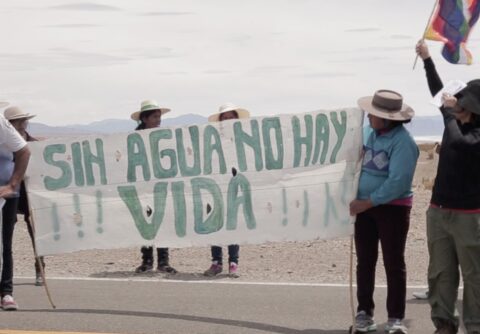
Rich in lithium but poor in water, traditional Andean communities want the world to recognise the pitfalls of surging demand for minerals vital to the global energy transition
Across the world, people hosting renewable energy projects are seeing few rewards. Advocates say a Belém Action Mechanism could make the green transition fairer
As importers face new costs under the Carbon Border Adjustment Mechanism, many are finding the biggest savings do not necessarily come from swapping to cleaner production
As the Iran war upends global energy markets, governments and consumers are cutting back – potentially locking in demand reductions that could lower the outlook for planet-heating emissions
Oil and gas blocks overlap with a fifth of forests in the Amazon, Congo Basin and SE Asia – policies are needed to transition away from fossil fuels and halt deforestation together
New UN-supported forum should challenge a global system that leaves many Global South nations with zero fiscal breathing space to navigate climate disasters and economic crises
Amid aid cuts, donor governments pledge less nature and climate funding to the Global Environment Facility (GEF), with the four-year package to be finalised in late May
Meeting the goal requires political will and a pathway that brings together efforts and drives implementation. An international roadmap can deliver this
Stay ahead with our unrivalled coverage
We provide experts and professionals around the world with the analysis and insight they need to navigate the biggest climate issues and negotiations.
To provide the best experiences, we use technologies like cookies to store and/or access device information. Consenting to these technologies will allow us to process data such as browsing behavior or unique IDs on this site. Not consenting or withdrawing consent, may adversely affect certain features and functions.
Functional
Always active
The technical storage or access is strictly necessary for the legitimate purpose of enabling the use of a specific service explicitly requested by the subscriber or user, or for the sole purpose of carrying out the transmission of a communication over an electronic communications network.
Preferences
The technical storage or access is necessary for the legitimate purpose of storing preferences that are not requested by the subscriber or user.
Statistics
The technical storage or access that is used exclusively for statistical purposes.The technical storage or access that is used exclusively for anonymous statistical purposes. Without a subpoena, voluntary compliance on the part of your Internet Service Provider, or additional records from a third party, information stored or retrieved for this purpose alone cannot usually be used to identify you.
Marketing
The technical storage or access is required to create user profiles to send advertising, or to track the user on a website or across several websites for similar marketing purposes.