Show courage to vote for a strong plastics treaty, campaigners urge countries
As UN talks on a new global plastics pact reach their endgame, environmentalists call for a vote that could stop a handful of states blocking an ambitious deal to curb production
Campaigners urged countries to "stop hiding behind consensus" as plastics treaty talks enter the final stage in Geneva. Photo: Trixie Guerrero/BFFP
Environmental campaigners have called on governments to “stop hiding behind consensus” at the UN plastics treaty talks and instead opt for a vote which they hope would win enough backing for an ambitious pact that tackles soaring plastic production.
Environmentalists and Indigenous groups held up signs urging countries to show courage, standing in front of the UN buildings in Geneva where negotiations are reaching the final stretch amid a continuing stalemate.
The demonstration, coordinated by the Break Free From Plastic movement of more than 13,000 organisations and individual supporters, coincided with the arrival of nearly 70 ministers at the talks.
Advertisement
“What we have seen here is that if you rely only on consensus, that means a single country or a handful of countries can block the entire process,” said Renée Sharp, director of plastics and petrochemical advocacy at the US-based Natural Resources Defense Council (NRDC). “We need strong action – we need a strong treaty,” she added.
Breaking the impasse
With only two days left until the negotiations are due to end, discussions have yet to settle on what the first global plastics pact should tackle.
A coalition of nearly 100 countries has pushed for the treaty to include binding provisions aimed at cutting plastic production to “sustainable levels” as part of a wide-ranging package of solutions.
But an ill-defined group of fossil-fuel producing nations, calling themselves the “like-minded” countries and vocally led by Gulf states, Russia and India, wants to limit the scope of the pact to management of plastic waste and largely voluntary measures.
Panama’s lead negotiator Juan Carlos Monterrey cheers on activists as he walks past the demonstration. Photo: Trixie Guerrero/BFFP
Panama’s lead negotiator Juan Carlos Monterrey cheers on activists as he walks past the demonstration. Photo: Trixie Guerrero/BFFP
Wong SiPeng, an advocate with C4 Center, an anti-corruption watchdog in Malaysia, said it would be impossible to make consensus work with two polar-opposite camps that do not want to budge.
“The clearest way to make a decision would be to vote and get us out of this gridlock,” she told Climate Home on the sidelines of Tuesday’s action. “This is not going anywhere – countries need to be brave enough to call for it.”
Advertisement
Voting battle
The issue of how governments should reach an agreement has haunted the UN plastics talks since their inception. The draft rules of procedure governing the negotiations offer the possibility of voting if efforts to reach consensus fail.
But the second round of talks in May 2023 descended into a procedural scuffle when countries, including Saudi Arabia, India and Iran, refused to move into substantive discussions unless that provision was ‘bracketed’ – meaning no agreement had been reached.
The row was eventually resolved with a compromise: an ‘interpretative statement’ noting that the rules of procedure would be applied provisionally and there were different understandings of the rule on voting.
In a panel discussion with Climate Home on Monday, David Azoulay, a senior attorney at the Center for International Environmental Law (CIEL), said fossil fuel-producing countries had since “laid a number of procedural traps to make it [voting] potentially politically costly and complicated”.
During a webinar hosted by Climate Home in Geneva, Panama’s climate envoy said his country would reject a weak deal that ignores the growing production of plastics
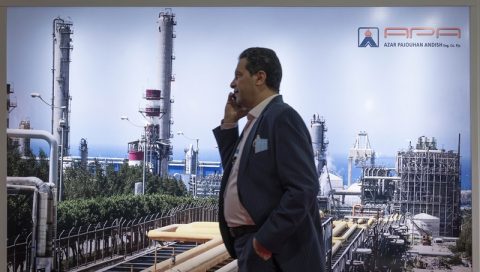
Iran’s plastics industry brings in much-needed foreign currency, which it can use to try and contain runaway inflation
Looking for the right moment
A call for a vote would almost certainly provoke a strong reaction from the members of the “like-minded” group, which have regularly restated in their public speeches that all decisions must be made on consensus. At a plenary last Saturday, Kuwait – speaking on behalf of that group – said that “any attempt to move forward without consensus risks producing an instrument that is neither legitimate nor implementable”.
But for CIEL’s Azoulay, associating multilateralism exclusively with consensus decision-making is “complete and utter nonsense”. He pointed out that voting takes place regularly at the United Nations General Assembly in New York. Using that tool “is not weakening multilateralism, it is saving it,” he added.
No country has so far openly signalled its intention to call for a vote at the plastics talks, despite the option being informally debated in the corridors of the UN headquarters in Geneva.
Campaigners hold up signs in front of UN buildings in Geneva. Photo: Trixie Guerrero/BFFP
Campaigners hold up signs in front of UN buildings in Geneva. Photo: Trixie Guerrero/BFFP
Laurianne Trimoulla, a project manager at the Switzerland-based Gallifrey Foundation, said a vote would need to take place “under the right circumstances when all conditions are perfectly aligned”.
“If countries call for a vote and it is not the right moment, it weakens the act of voting,” she added.
NRDC’s Sharp said some countries are hesitant to move beyond decisions approved by consensus because they do not want to give the impression that multilateralism has no future.
“But the reality is that human health and environmental health are on the line – and we can’t have countries hiding behind consensus to not take the action that’s needed,” she added.
Our unprecedented reporting provides experts and professionals globally with the analysis and insight they need to navigate the most important climate issues.
Trusted by the UN, World Bank, and governments around the world, sign up today and see why our award-winning coverage has been considered the authority for almost 15 years.
Essential
£0
A few top stories each week alongside our Climate Weekly newsletter.
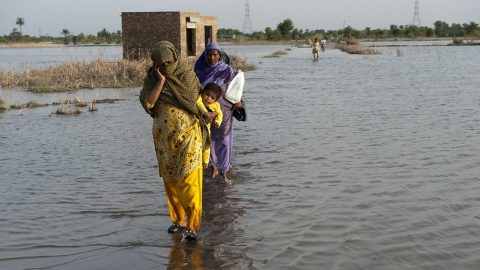
Across Asia, the installation of early warning systems, alongside community involvement, is now viewed as a key response to the ever-present threat of climate disasters.
COP30’s headline win – the creation of the first global Just Transition mechanism – did not materialise overnight. Born out of years of work, it flourished during two weeks of civil society alignment in one of the few negotiating tracks that gained momentum
Spain has made good progress in supporting workers to transition away from fossil fuels. But trade unions are pushing for stronger efforts to renew rural life
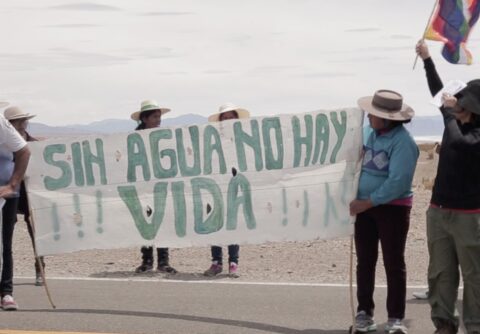
Rich in lithium but poor in water, traditional Andean communities want the world to recognise the pitfalls of surging demand for minerals vital to the global energy transition
Across the world, people hosting renewable energy projects are seeing few rewards. Advocates say a Belém Action Mechanism could make the green transition fairer
As importers face new costs under the Carbon Border Adjustment Mechanism, many are finding the biggest savings do not necessarily come from swapping to cleaner production
As the Iran war upends global energy markets, governments and consumers are cutting back – potentially locking in demand reductions that could lower the outlook for planet-heating emissions
Oil and gas blocks overlap with a fifth of forests in the Amazon, Congo Basin and SE Asia – policies are needed to transition away from fossil fuels and halt deforestation together
New UN-supported forum should challenge a global system that leaves many Global South nations with zero fiscal breathing space to navigate climate disasters and economic crises
Amid aid cuts, donor governments pledge less nature and climate funding to the Global Environment Facility (GEF), with the four-year package to be finalised in late May
Meeting the goal requires political will and a pathway that brings together efforts and drives implementation. An international roadmap can deliver this
Stay ahead with our unrivalled coverage
We provide experts and professionals around the world with the analysis and insight they need to navigate the biggest climate issues and negotiations.
To provide the best experiences, we use technologies like cookies to store and/or access device information. Consenting to these technologies will allow us to process data such as browsing behavior or unique IDs on this site. Not consenting or withdrawing consent, may adversely affect certain features and functions.
Functional
Always active
The technical storage or access is strictly necessary for the legitimate purpose of enabling the use of a specific service explicitly requested by the subscriber or user, or for the sole purpose of carrying out the transmission of a communication over an electronic communications network.
Preferences
The technical storage or access is necessary for the legitimate purpose of storing preferences that are not requested by the subscriber or user.
Statistics
The technical storage or access that is used exclusively for statistical purposes.The technical storage or access that is used exclusively for anonymous statistical purposes. Without a subpoena, voluntary compliance on the part of your Internet Service Provider, or additional records from a third party, information stored or retrieved for this purpose alone cannot usually be used to identify you.
Marketing
The technical storage or access is required to create user profiles to send advertising, or to track the user on a website or across several websites for similar marketing purposes.