One of my fondest memories of the international climate negotiations was the day in December 2007 when Howard Bamsey announced on the floor of the plenary in Bali that Australia would ratify the Kyoto Protocol.
Advertisement
After years spent in the wilderness, it seemed that Australia would finally play a constructive and progressive role in global climate action. I think all of us Aussies at the talks felt a sense of pride in that moment.
We had come to this point in part because communities throughout Australia recognised that climate change matters an awful lot to our nation.
Years of crippling drought, ever increasing alarm from elements of the scientific community, and a feeling that action on climate change was a benchmark for whether our political leaders had a plan for the future all culminated in the acceptance by both major parties that we should implement effective domestic policies and join global efforts through formalising our commitments made ten years earlier in Japan.
Will the new reports of the Intergovernmental Panel on Climate Change (IPCC) impact any of this? The short answer is probably not right away.
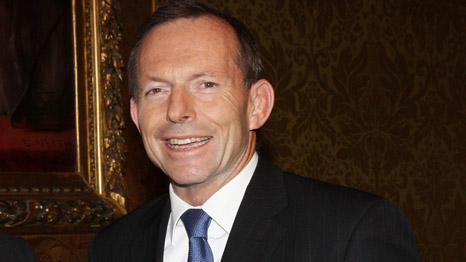
Australia’s new Prime Minister Tony Abbott has been clear that he now accepts climate change as a real threat. The Coalition he heads, even during the election, reiterated its support to Australia’s emission targets of 5 to 25% reductions on 2000 levels by 2020.
Advertisement
Just last week, the new Environment Minister reiterated his government’s “in principle” support for Australia’s second commitment period target under Kyoto. They are likely to keep to this pitch for a little while yet and may even use the IPCC reports an opportunity to reiterate the Government’s support for climate science.
How the reports of the IPCC impact in the longer term is more complex and will interact with other arguably more important drivers in domestic policy making. The IPCC and the risks they report to Australia will be a backdrop against this.
In the short-term the key drivers are more likely to be a protracted political fight over Coalition attempts to repeal the emission trading scheme. Most now see this as being unlikely before late 2014 (or even early 2015) as the Labor party and the Greens will likely block attempts to do so while they retain the balance of power in our Senate.
After July 2014, when the new Senate is installed, the Coalition would need to negotiate with an unpredictable group of Senators from minor parties to get their way. It is uncertain whether the Government will be prepared to pay the price for securing their votes and whether their alternative policy can make it through the Parliament.
While the battle rages, the current carbon laws keep working. Businesses are already looking at interim measures to link our scheme to international markets earlier than the planned 2015, to avoid higher carbon prices. Labor would likely agree to this and the government will be under business pressure to compromise on this until (and if) they can remove the scheme altogether.
Many in business will also have an eye to the longer term. The Government’s alternative policy as it currently stands is not sustainable in the long-term. It is unlikely to be able to achieve sustain decarbonisation of the economy and meet short and long-term emission targets.
The Government themselves had said they would review post 2020 policies in 2015.
This is where the IPCC and its impact on international process are important. Clear progress internationally and on domestic policy in key countries like China, the US and APEC nations will signal to business here that whoever is in Government will need to implement a credible domestic policy framework.
This leaves the choice between policies that are likely to be more onerous and expensive than an emissions trading scheme linked to international markets. The spectre of a more stringent regulator approaches and a myriad of sectoral approaches mimicking President Obama’s recent policy announcement will grow.
Business anxiety combined with growing climate impacts here and overseas, mixed with a lack of appetite in the community around the protracted politicisation of an issue they want something done about will through time inevitably focus the minds of whoever is in Government back on more effective action.
This at the heart of the ongoing and positive role the IPCC can play in Australia. It will highlight that physics will ultimately trump politics and that Australia has nowhere to hide from climate impacts and the inevitability of strong global action.
Our unprecedented reporting provides experts and professionals globally with the analysis and insight they need to navigate the most important climate issues.
Trusted by the UN, World Bank, and governments around the world, sign up today and see why our award-winning coverage has been considered the authority for almost 15 years.
Essential
£0
A few top stories each week alongside our Climate Weekly newsletter.
As importers face new costs under the Carbon Border Adjustment Mechanism, many are finding the biggest savings do not necessarily come from swapping to cleaner production
Oil and gas blocks overlap with a fifth of forests in the Amazon, Congo Basin and SE Asia – policies are needed to transition away from fossil fuels and halt deforestation together
New UN-supported forum should challenge a global system that leaves many Global South nations with zero fiscal breathing space to navigate climate disasters and economic crises
Meeting the goal requires political will and a pathway that brings together efforts and drives implementation. An international roadmap can deliver this
As Middle East conflict rattles energy markets, Barbados charts a practical path for small islands to harness abundant renewables and strengthen energy security
As importers face new costs under the Carbon Border Adjustment Mechanism, many are finding the biggest savings do not necessarily come from swapping to cleaner production
As the Iran war upends global energy markets, governments and consumers are cutting back – potentially locking in demand reductions that could lower the outlook for planet-heating emissions
Oil and gas blocks overlap with a fifth of forests in the Amazon, Congo Basin and SE Asia – policies are needed to transition away from fossil fuels and halt deforestation together
New UN-supported forum should challenge a global system that leaves many Global South nations with zero fiscal breathing space to navigate climate disasters and economic crises
Amid aid cuts, donor governments pledge less nature and climate funding to the Global Environment Facility (GEF), with the four-year package to be finalised in late May
Meeting the goal requires political will and a pathway that brings together efforts and drives implementation. An international roadmap can deliver this
Stay ahead with our unrivalled coverage
We provide experts and professionals around the world with the analysis and insight they need to navigate the biggest climate issues and negotiations.
To provide the best experiences, we use technologies like cookies to store and/or access device information. Consenting to these technologies will allow us to process data such as browsing behavior or unique IDs on this site. Not consenting or withdrawing consent, may adversely affect certain features and functions.
Functional
Always active
The technical storage or access is strictly necessary for the legitimate purpose of enabling the use of a specific service explicitly requested by the subscriber or user, or for the sole purpose of carrying out the transmission of a communication over an electronic communications network.
Preferences
The technical storage or access is necessary for the legitimate purpose of storing preferences that are not requested by the subscriber or user.
Statistics
The technical storage or access that is used exclusively for statistical purposes.The technical storage or access that is used exclusively for anonymous statistical purposes. Without a subpoena, voluntary compliance on the part of your Internet Service Provider, or additional records from a third party, information stored or retrieved for this purpose alone cannot usually be used to identify you.
Marketing
The technical storage or access is required to create user profiles to send advertising, or to track the user on a website or across several websites for similar marketing purposes.