Mongolia flood defence project shows the way for urban adaptation
Sponsored content: The project incorporates infrastructural upgrades with the formation of community action groups to improve the capital’s flood resilience
UN-Habitat pictured with community members during winter in the Mongolia project area that includes tree planting activities (Photo: UN)
As cities expand and climate change impacts worsen, urban adaptation is crucial.
By 2050, around 68% of the world’s population is projected to live in urban areas, while over 1.6 billion people in 970 cities will face regular heatwaves and summer temperatures surpassing 35°C.
While adaptation efforts have historically focused on rural areas, a project in Mongolia, which incorporates a wide range of initiatives and aims to build the resilience of high-risk communities, is directly confronting the burden of urban climate impacts.
Advertisement
The country has seen warming of over 2°C since recordings started in 1940 and now experiences climate related hazards such as extreme rainfall, strong winds, and snowstorms, which are only intensifying.
Most vulnerable to these changes are traditional settlements, known as ger districts, which are often established on low land and mountain slopes, susceptible to run-off and consequently flooding.
“These floods affect homes and other assets, and lead to overflow of latrines, heavily polluting water and soil, which in turn lead to increased incidents of disease often affecting children,” said Enkhtsetseg Shagdarsuren, project manager of UN-Habitat Mongolia.
“Extreme flood incidents are increasingly recorded in these areas, not only destroying homes and assets, but also causing death,” she adds.
Seven ger districts in Ulaanbaatar, Mongolia’s capital, were chosen for the adaptation project, and work by UN-Habitat to improve the adaptive infrastructure of the communities to flooding began in 2019.
Made possible by a USD 4.5 million grant by the Adaptation Fund, the project has a multifaceted and participatory approach to maximise adaptive capacities across district and community levels.
Advertisement
“By focusing on flooding, the project aims to increase the resilience of the ger areas through the construction of physical flood infrastructure and improved sanitation services; improvement of the knowledge on flood hazard and risk exposure and vulnerability for the ger areas; and improvement of the resilience and adaptive capacity of target communities,” Shagdarsuren says.
As well as tangible developments, like improved flood services, the project brings together action and training groups, 10 to 20 households at a time, where community members learn and share in an environment that encourages awareness raising, communication, and a friendly community spirit.
Now, 89 groups, half of which are led by women, have been formed, and are creating and implementing local action plans. Five flood protection and drainage facilities have also been constructed.
Over 27,000 people have so far benefited from increased flood protection and 6,000 have better sanitation infrastructure, while a further 1 million people across the capital are benefiting indirectly.
Tuya, a retired woman who lives in one of the project’s districts, has suffered from seasonal floods since 2015 and decided to support UN-Habitat activities when the team arrived. Usually spending most of her time indoors, Tuya has since engaged with her community and the project has helped her make friends.
“I’m now a leader of my neighbourhood’s primary group,” she says, and “thanks to the drainage channels constructed under the project, our living environment has become dry and comfortable. People are happier and actively engaged with the improvement activities.”
As well as serving as a model to be replicated across the city, the activities showcase the importance of the urban environment in adaptation efforts.
Drainage canals are reducing flood risks through the project (Photo: UN)
From Lao PDR to Honduras, the Solomon Islands and Senegal, projects in urban areas and settlements of this nature are being financed by the Adaptation Fund as part of its five-year Medium-Term Strategy to serve the most vulnerable and align with the Paris Agreement and UN Sustainable Development Goals, and the Fund’s niche will continue to be further strengthened in its next five-year plan.
“Climate change is increasingly impacting cities, informal settlements and other urban areas around the world, showing a rising need to invest in urban adaptation action and resilience building,” said Mr. Mikko Ollikainen, Head of the Adaptation Fund.
“The Adaptation Fund’s urban initiatives seek to increase vulnerable urban communities’ resilience to climate change and disaster risks and strengthen their capacities to respond effectively. As the urgency of urban adaptation has grown, the Adaptation Fund is working with a wide range of partners and donors to finance and implement projects and programmes in the most vulnerable communities and regions.”
Our unprecedented reporting provides experts and professionals globally with the analysis and insight they need to navigate the most important climate issues.
Trusted by the UN, World Bank, and governments around the world, sign up today and see why our award-winning coverage has been considered the authority for almost 15 years.
Essential
£0
A few top stories each week alongside our Climate Weekly newsletter.
Across Asia, the installation of early warning systems, alongside community involvement, is now viewed as a key response to the ever-present threat of climate disasters.
COP30’s headline win – the creation of the first global Just Transition mechanism – did not materialise overnight. Born out of years of work, it flourished during two weeks of civil society alignment in one of the few negotiating tracks that gained momentum
Spain has made good progress in supporting workers to transition away from fossil fuels. But trade unions are pushing for stronger efforts to renew rural life
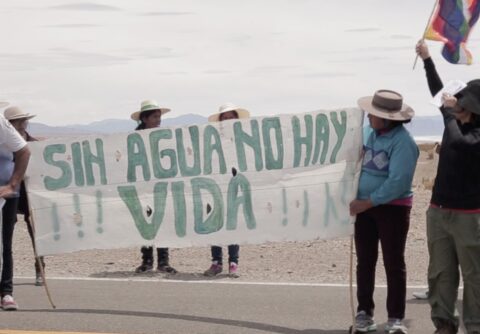
Rich in lithium but poor in water, traditional Andean communities want the world to recognise the pitfalls of surging demand for minerals vital to the global energy transition
Across the world, people hosting renewable energy projects are seeing few rewards. Advocates say a Belém Action Mechanism could make the green transition fairer
As importers face new costs under the Carbon Border Adjustment Mechanism, many are finding the biggest savings do not necessarily come from swapping to cleaner production
As the Iran war upends global energy markets, governments and consumers are cutting back – potentially locking in demand reductions that could lower the outlook for planet-heating emissions
Oil and gas blocks overlap with a fifth of forests in the Amazon, Congo Basin and SE Asia – policies are needed to transition away from fossil fuels and halt deforestation together
New UN-supported forum should challenge a global system that leaves many Global South nations with zero fiscal breathing space to navigate climate disasters and economic crises
Amid aid cuts, donor governments pledge less nature and climate funding to the Global Environment Facility (GEF), with the four-year package to be finalised in late May
Meeting the goal requires political will and a pathway that brings together efforts and drives implementation. An international roadmap can deliver this
Stay ahead with our unrivalled coverage
We provide experts and professionals around the world with the analysis and insight they need to navigate the biggest climate issues and negotiations.
To provide the best experiences, we use technologies like cookies to store and/or access device information. Consenting to these technologies will allow us to process data such as browsing behavior or unique IDs on this site. Not consenting or withdrawing consent, may adversely affect certain features and functions.
Functional
Always active
The technical storage or access is strictly necessary for the legitimate purpose of enabling the use of a specific service explicitly requested by the subscriber or user, or for the sole purpose of carrying out the transmission of a communication over an electronic communications network.
Preferences
The technical storage or access is necessary for the legitimate purpose of storing preferences that are not requested by the subscriber or user.
Statistics
The technical storage or access that is used exclusively for statistical purposes.The technical storage or access that is used exclusively for anonymous statistical purposes. Without a subpoena, voluntary compliance on the part of your Internet Service Provider, or additional records from a third party, information stored or retrieved for this purpose alone cannot usually be used to identify you.
Marketing
The technical storage or access is required to create user profiles to send advertising, or to track the user on a website or across several websites for similar marketing purposes.