Floating farms are transforming life on India’s waterways
Regenerative farming can help communities rebuild after climate disasters
Women beneficiaries of Self-Help Group (SHG) nurturing the summer crops in a float-farm in Amtoli village in the Sundarbans region of southern India and parts of Bangladesh (Photo: South Asian Forum for Environment)
As the climate crisis unfolds it is increasingly pushing people into desperate, but inventive directions.
This fact is apparent in the Sundarban region of southern India and Bangladesh. It is a biodiverse landscape covering a vast area of swamp and mangrove. The region extends to 10,000 square kilometres where the Bay of Bengal meets the land and seeps inward through a network of winding rivers.
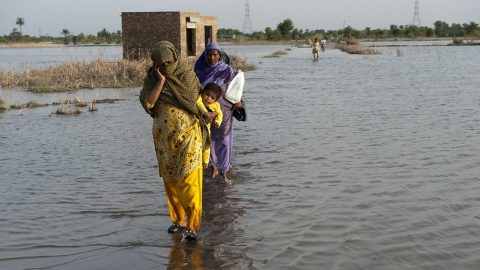
It is a place where people have spent generations living alongside water and the rhythm of the seasons. But the Sundarbans are now feeling the force of climate change as it faces regular extreme weather events and the devastating impacts of cyclones. The waters here are rising by an average of over 3 cm a year and storms have increased by 47% in the past decade.
Advertisement
Floating farms
The huge amounts of water coming off the bay during these cyclones deposit an equal amount of salt onto farmland and in groundwater, destroying crops and putting clean drinking supplies at risk. Increased extreme weather is forcing communities into greater conflict with natural wildlife – in an area with a sizeable population of tigers – and leading to greater urban migration. In response, communities are looking at new ways to protect their livelihood and the environment they depend on.
Conventional farming methods in the region are chemically intensive, harm nature and remain at the mercy of rising sea levels. One innovative project is instead seeking to work with the water, lifting farms onto floating platforms which support sustainability and restore community life.
A trial of floating farms is run by the South Asian nature Forum for Environment (SAFE), supported by the Adaptation Fund. Funded by the Adaptation Fund Climate Innovation Accelerator (AFCIA), the initiative is part of the first round of AFCIA grants financed by the Fund and administered by the UN Development Programme. The project involves 12 local villages and 2,200 households, which in turn support thousands in the wider agrarian economy.
First piloted in India and Bangladesh, the initiative is being scaled up through AFCIA. The new farms use hydroponic technology, which avoids the damaging effects of regularly toiling soil. They can grow a variety of seasonal crops in grow bags, fed by solar power and a small irrigation unit which removes saltwater from the process. The unique structures are also designed to work alongside fish and crab farming and support the restoration of embankments in flooded areas.
Climate resilience
The farms are also more resilient to the extreme weather which is now hitting India and Bangladesh.
In the past two years the Sundarbans have experienced two ‘super-cyclones’, called Yaas and Amphan, which caused billions of dollars of damage. Despite this, the floating farms, due to having climate resilience built into their design, saw only an estimated 10% loss.
Advertisement
Ranjan Mandal, the head of Amtoli village council, said that: “After Amphan and Yaas, three quarters of the village was under saltwater. We had lost all hope but were provided for by SAFE’s innovative adaptation. It is unique that on a bamboo float raft, we can grow all vegetables for both self-consumption and sale, as well as saving the seeds for the next crop cycle. This is very much locally made and well-framed to survive the storms. Our farmers can make it (the floats) themselves and we can use it for multiple purposes.”
Self-Help Group members in Tipligheri Village of Sundarbans, harvesting winter coriander leaves, a cash crop that sells at a high price, from the array of float-farms. Tipligheri houses 100 float-farms engaging nearly 120 women farmers (Photo: South Asian Forum for Environment)
Community benefits
The project has been a revelation to the local community which has worked in participation with SAFE on its implementation. Bisakha Mondal, a farmer and leader of a local women’s self-help group, said the farms “look like one vast garden loaded with fresh vegetables”.
“Our group can collectively harvest all vegetables and fish in the seasonal cycles that we plan together. We have over 500 women in my village now trained in either float farming techniques or fish and crab farming.”
Another benefit from the scheme is market access for farmers. The farms allow crops to be rotated with wider market demands. SAFE trains farmers in maximising the benefits of their produce, including by being provided improved access to banking. Mondal adds that “this is the first time we went to town for training and got our own bank accounts”.
Deepali Auliya, a farmer in Tipligheri village, comments: “I can now grow both vegetables and fish in my own pond even in flood situations. I don’t have to leave my kids all alone and go to work. I can also spend my time on other activities like honey harvesting and taking care of my kids”.
Innovative farming
Regenerative farming, an approach aimed at farming with and revitalising nature such as restoring soil health, has the potential to transform areas which face a constant battle with the rising tides. But its focus on hydroponic technology means it can be used in areas experiencing drought or soil depletion.
It is clear this is vital in many parts of the world where climate disasters are becoming the norm, and where relying on the land and seasonal patterns is no longer possible.
“The Adaptation Fund by its nature has been financing innovative and often groundbreaking projects over the years, but with the rising climate urgency and adaptation gap we are seeing in developing countries we need to focus more support to innovation in order to advance new ways to accelerate effective climate action,” said Mikko Ollikainen, Head of the Adaptation Fund.
“It is great to see effective and scalable results happening on the ground, and improving lives of vulnerable communities in the Sundarbans,” added Saliha Dobardzic, senior climate change specialist who coordinates the Fund’s Innovation programme. “The floating farms project and others around the world are great examples of the Adaptation Fund’s innovation pillar in action.”
Adam Wentworth is a freelance writer based in London.
Our unprecedented reporting provides experts and professionals globally with the analysis and insight they need to navigate the most important climate issues.
Trusted by the UN, World Bank, and governments around the world, sign up today and see why our award-winning coverage has been considered the authority for almost 15 years.
Essential
£0
A few top stories each week alongside our Climate Weekly newsletter.
Across Asia, the installation of early warning systems, alongside community involvement, is now viewed as a key response to the ever-present threat of climate disasters.
COP30’s headline win – the creation of the first global Just Transition mechanism – did not materialise overnight. Born out of years of work, it flourished during two weeks of civil society alignment in one of the few negotiating tracks that gained momentum
Spain has made good progress in supporting workers to transition away from fossil fuels. But trade unions are pushing for stronger efforts to renew rural life
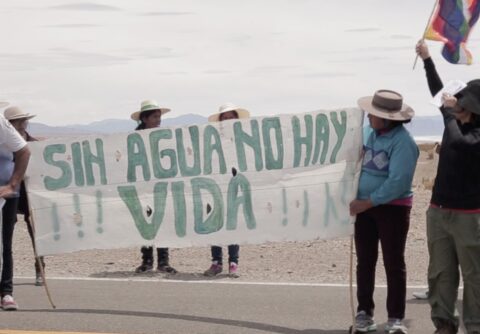
Rich in lithium but poor in water, traditional Andean communities want the world to recognise the pitfalls of surging demand for minerals vital to the global energy transition
Across the world, people hosting renewable energy projects are seeing few rewards. Advocates say a Belém Action Mechanism could make the green transition fairer
As importers face new costs under the Carbon Border Adjustment Mechanism, many are finding the biggest savings do not necessarily come from swapping to cleaner production
As the Iran war upends global energy markets, governments and consumers are cutting back – potentially locking in demand reductions that could lower the outlook for planet-heating emissions
Oil and gas blocks overlap with a fifth of forests in the Amazon, Congo Basin and SE Asia – policies are needed to transition away from fossil fuels and halt deforestation together
New UN-supported forum should challenge a global system that leaves many Global South nations with zero fiscal breathing space to navigate climate disasters and economic crises
Amid aid cuts, donor governments pledge less nature and climate funding to the Global Environment Facility (GEF), with the four-year package to be finalised in late May
Meeting the goal requires political will and a pathway that brings together efforts and drives implementation. An international roadmap can deliver this
Stay ahead with our unrivalled coverage
We provide experts and professionals around the world with the analysis and insight they need to navigate the biggest climate issues and negotiations.
To provide the best experiences, we use technologies like cookies to store and/or access device information. Consenting to these technologies will allow us to process data such as browsing behavior or unique IDs on this site. Not consenting or withdrawing consent, may adversely affect certain features and functions.
Functional
Always active
The technical storage or access is strictly necessary for the legitimate purpose of enabling the use of a specific service explicitly requested by the subscriber or user, or for the sole purpose of carrying out the transmission of a communication over an electronic communications network.
Preferences
The technical storage or access is necessary for the legitimate purpose of storing preferences that are not requested by the subscriber or user.
Statistics
The technical storage or access that is used exclusively for statistical purposes.The technical storage or access that is used exclusively for anonymous statistical purposes. Without a subpoena, voluntary compliance on the part of your Internet Service Provider, or additional records from a third party, information stored or retrieved for this purpose alone cannot usually be used to identify you.
Marketing
The technical storage or access is required to create user profiles to send advertising, or to track the user on a website or across several websites for similar marketing purposes.