• News ▾
    • Politics
    • Energy
    • Justice
    • Finance
    • Business
    • Science
    • Nature
    • Carbon markets
    • Explainers ▾
      • Clean energy transition
      • Sustainable Aviation Fuel
    • All news
  • Investigations
  • Series ▾
    • Clean Energy Frontier
    • Aviation’s Green Dream
  • Comment
  • About ▾
    • About
    • The team
    • Write for us
    • Advertising, partners and sponsorship
  • Contact
Sign In Subscribe Now
  • News ▾
    • Politics
    • Energy
    • Justice
    • Finance
    • Business
    • Science
    • Nature
    • Carbon markets
    • Explainers ▾
      • Clean energy transition
      • Sustainable Aviation Fuel
    • All news
  • Investigations
  • Series ▾
    • Clean Energy Frontier
    • Aviation’s Green Dream
  • Comment
  • About ▾
    • About
    • The team
    • Write for us
    • Advertising, partners and sponsorship
  • Contact
Sign In Subscribe Now
Partner Content
Jun 27, 2023 | Last Update: Sep 7, 2025
Sponsored

Disaster risk reduction needs to sit at the heart of climate adaptation

An effective warning system could avoid billions of dollars in losses and even 24 hours’ notice could cut the damage caused by 30%.
Adaptation disaster risk reduction
An Adaptation Fund project has helped farmers in Sudan resist droughts. (Photo: Adaptation Fund)

Adam Wentworth

Author

Sponsored articles are produced by Climate Home News journalists with the support and collaboration of partners on topics of mutual interest.

Learn more
Share:
  • X (Twitter)
  • Facebook
  • LinkedIn
  • WhatsApp
  • Email

Climate disasters aren’t going away. In recent years the world has experienced an increase in both the number and severity of disasters caused by rising global temperatures.

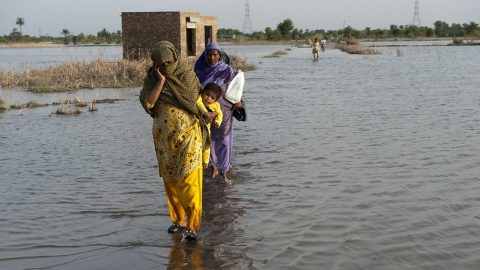
One example comes from Christian Aid. Analysis by the charity found that in 2022 alone the top 10 climate disasters cost an estimated US$168 billion. These disasters, from flooding in Pakistan to drought in China and Europe, displaced over seven million people.

But the current frequency of climate disasters could serve as a mere prelude for what is to come as temperatures continue to tick upwards. The UN’s Office for Disaster Risk Reduction estimates that by 2030 the number could increase to 560 a year, or 1.5 disasters a day.


Advertisement

As the costs mount so do calls for compensation from vulnerable nations which have contributed little to the crisis. The issue of loss and damage has gained prominence in recent years, but so far it remains a work in progress.

Preparing for risk

A crucial way to stem the rising economic and human cost is to improve resilience and to better prepare for the future. And one key component behind any effective disaster risk strategy is to have an early warning system in place.

“Vulnerable communities in climate hotspots are being blindsided by cascading climate disasters without any means of prior alert,” the UN Secretary-General, António Guterres, said at the COP27 climate summit last year. He was speaking at the launch of ‘Early Warnings for All’, an initiative which seeks to protect the global population with early warning systems by 2027.

By some estimates an effective warning system could avoid billions of dollars in losses and even 24 hours’ notice could cut the damage caused by 30%. The question is how to develop the technology as part of a wider strategy to tackle disaster risk.

The Adaptation Fund is one organisation working on the issue, and it was set up to support developing countries against the ravages of climate change. The fund is heavily involved in financing disaster risk reduction projects, in particular across the African continent, which is deeply exposed to the climate crisis.

Mikko Ollikainen, who heads up the fund, said it has “a lengthy history of supporting adaptation projects that help minimize and avert further loss and damage” adding that 20% of the overall portfolio across the globe is now dedicated to disaster risk reduction.


Advertisement

“Often projects are helping establish early warning systems and hydrometeorological monitoring for the first time in certain vulnerable areas, which create models that can later be scaled up to other areas and nationwide,” he commented.

Adaptation in Africa

One of its funded projects is being run by the World Meteorological Organization in the Volta Basin in West Africa, and involves six countries: Benin, Burkina Faso, Côte d’Ivoire, Ghana, Mali and Togo. The basin covers an area of 400,000km2 and in recent decades flooding and drought have become commonplace, affecting up to two million people in the region.

The project seeks to identify risk maps where flooding is likely to take place, sophisticated modelling on future flood and drought scenarios, and real-time data shared across borders and national institutions.

A main consideration is that disasters do not respect borders and building an effective response will mean strengthening networks across neighbouring countries which all have an equal stake in being fully prepared.

Another partner of the Fund in the region is the Sahara and Sahel Observatory (OSS), an intergovernmental organisation, based in Tunisia. One of its ongoing projects is supporting farmers from persistent drought affecting parts of Djibouti, Kenya, Sudan, and Uganda.

Lack of rainfall in the region is putting hundreds of thousands of livelihoods at risk. OSS approaches its work from the bottom up rather than top down. The organisation understands the central role for communities in building a lasting response to current and future disasters.

Culture-centered work

Projects are implemented with an understanding of the huge variety of cultures in the region, and with an estimated 340 different languages spoken, finding the right people to go in and speak to farmers is essential. An example includes learning how smallholders are being forced into different regions to maintain a living.

“It is learning from people who will tell you why the birds are not flying to the east but to the south instead”, comments Steve Muhanji, a project coordinator at OSS. “This is local knowledge that can be used with technology.”

The technology includes upgrading existing weather stations and using remote sensors to better understand how the environment is changing each year.

On top of this, OSS is working to ensure gender balance across its projects so that in the course of developing a new early warning system in the region, women are fully involved and an action plan is created to guarantee female participation.

“We work hard to support the community to organise and appoint a focal point, or leader, on the project. This person will speak the local language, advocate for others, and champion the project’s benefits,” adds Muhanji.

If the world hopes to reduce the impact of climate disasters it needs to work harder to understand them. A recent UN conference to review progress on the subject found that while 125 countries now have national strategies on disaster risk reduction, half of the world does not have early warning systems in place.

Lessons from projects on the frontline emphasise the need for high levels of investment in these new technologies, combined with deep levels of community participation, backed up by strong and supportive national institutions.

This post was sponsored by the Adaptation Fund. See our editorial guidelines for what this means.

Benefit from more essential insight

Our unprecedented reporting provides experts and professionals globally with the analysis and insight they need to navigate the most important climate issues.

Trusted by the UN, World Bank, and governments around the world, sign up today and see why our award-winning coverage has been considered the authority for almost 15 years.

Essential

£0

A few top stories each week alongside our Climate Weekly newsletter.

Register for free
BEST VALUE

Premium

£130

per year

Unlimited access to our expert coverage alongside our Climate Weekly newsletter.

Subscribe today

Premium

£40

per quarter

Unlimited access to our expert coverage alongside our Climate Weekly newsletter. You can upgrade to an annual subscription at any time.

Subscribe today

Stories from the same category

  • Mar 30, 2026
    Sponsored

    Island nations fight to save cultural heritage from climate change

    The climate crisis is putting human heritage in the firing line. In response, small island states are learning how to adapt
    Read more
  • Mar 24, 2026
    Sponsored

    Early warning systems are saving lives in Central Asia

    Across Asia, the installation of early warning systems, alongside community involvement, is now viewed as a key response to the ever-present threat of climate disasters.
    Read more
  • Anabella Rosemberg of CAN International delivers the final intervention by environmental NGOs at the closing COP30 plenary
    Dec 10, 2025
    Sponsored

    How Belém launched the Just Transition mechanism

    COP30’s headline win – the creation of the first global Just Transition mechanism – did not materialise overnight. Born out of years of work, it flourished during two weeks of civil society alignment in one of the few negotiating tracks that gained momentum
    Read more
  • Nov 15, 2025
    Sponsored

    COP30: Spain’s unions say just transition means renewing communities beyond jobs

    Spain has made good progress in supporting workers to transition away from fossil fuels. But trade unions are pushing for stronger efforts to renew rural life
    Read more
  • Nov 13, 2025
    Energy

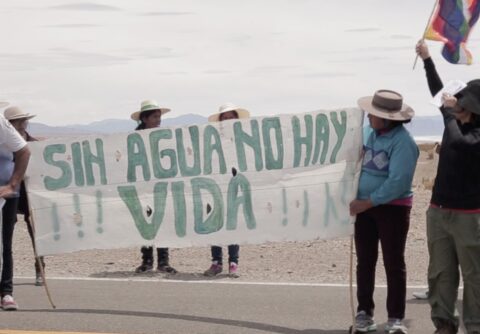
    “Water is worth more than lithium,” Indigenous Argentine community tells COP30

    Rich in lithium but poor in water, traditional Andean communities want the world to recognise the pitfalls of surging demand for minerals vital to the global energy transition
    Read more
  • Nov 9, 2025
    Sponsored

    A just transition for renewables: Why COP30 must put people before power

    Across the world, people hosting renewable energy projects are seeing few rewards. Advocates say a Belém Action Mechanism could make the green transition fairer
    Read more

    Other stories

    Apr 17, 2026
    Politics

    Q&A: Look beyond Trump for the full story on US climate action, says university dean

    Lawyer Lou Leonard, who leads the climate school at Clark University, says Washington’s attacks haven’t halted climate efforts across American society
    Read more
    Apr 16, 2026
    News

    US pressure puts World Bank’s climate plan at risk

    Closed-door talks over the World Bank’s climate agenda have stalled, as the US pushes to scrap green targets and expand support for fossil fuels
    Read more
    Apr 16, 2026
    Clean Energy Frontier

    As US and China seek rare earths, Brazilian lawmakers push for state-owned developer

    Pro-government lawmakers want Brazil to use mining for rare earths, key to many green technologies, to drive economic development
    Read more
    Apr 16, 2026
    Comment

    EU carbon tax risks penalising efficient producers over data gaps

    As importers face new costs under the Carbon Border Adjustment Mechanism, many are finding the biggest savings do not necessarily come from swapping to cleaner production
    Read more
    Apr 15, 2026
    News

    IEA slashes pre-war oil demand forecast by nearly a million barrels per day

    As the Iran war upends global energy markets, governments and consumers are cutting back – potentially locking in demand reductions that could lower the outlook for planet-heating emissions
    Read more
    COP16 confronts "huge" challenge of protecting 30% of world's land and sea
    Apr 15, 2026
    Comment

    Fossil Free Zones can be on-ramps to the clean energy transition

    Oil and gas blocks overlap with a fifth of forests in the Amazon, Congo Basin and SE Asia – policies are needed to transition away from fossil fuels and halt deforestation together
    Read more
    Apr 14, 2026
    Politics

    Türkiye sets COP31 dates and appoints Australian cattle farmer as youth champion

    In an open letter, Murat Kurum gives details of the October Pacific pre-COP and the November COP31 leaders’ summit in the Turkish city of Antalya
    Read more
    Apr 14, 2026
    Comment

    Broken debt system must be fixed to confront future climate shocks

    New UN-supported forum should challenge a global system that leaves many Global South nations with zero fiscal breathing space to navigate climate disasters and economic crises
    Read more
    Petrus Asuy sow forest crops seed in his nursery in Muara Tae Village, East Kalimantan Province of Indonesia on September 2015. The crops would be planted in the intact forest as part of community reforestation. Of their original 11.000 hectares of land, only 400 hectares can survive when the rest were destroyed by palm oil plantations and coal mining. In 2015, United Nations awarded Equator Prize to Muara Tae Community to recognize their effort in protecting ancestral forest. Agriculture and agroforestry are the primary income for indigenous people in Indonesia. Forest and agriculture land conversion for monoculture plantations and coal mining have threaten the indigenous communities. When the threat become rampant, indigenous people believe that planting trees and farming are considered as an act to protect their land.
    Apr 10, 2026
    News

    GEF raises $3.9bn ahead of funding deadline, $1bn below previous budget

    Amid aid cuts, donor governments pledge less nature and climate funding to the Global Environment Facility (GEF), with the four-year package to be finalised in late May
    Read more
    An aerial view of a deforested zone in "Ñembi Guasu" conservation area, in Bolivia.
    Apr 10, 2026
    Comment

    How a global roadmap can meet the promise to halt deforestation

    Meeting the goal requires political will and a pathway that brings together efforts and drives implementation. An international roadmap can deliver this
    Read more
    Climate Home News is an award-winning independent digital publication reporting on the international politics of the climate crisis.

    • News
    • Clean Energy Frontier
    • Investigations
    • Comment
    • Sponsored
    • Explainers
    • Subscribe at Climate Home News
    • Advertising, partners and sponsorship
    • Contact us
    • Privacy policy
    • Cookie Policy
    • Terms of Use
    DESIGNED BY SPOOVIO | DEVELOPED BY XT

    Stay ahead with our unrivalled coverage

    We provide experts and professionals around the world with the analysis and insight they need to navigate the biggest climate issues and negotiations.

    Sign Up

    Sign up today to gain immediate access.

    Login

    Login if you already have an account.

    Manage Cookie Consent
    To provide the best experiences, we use technologies like cookies to store and/or access device information. Consenting to these technologies will allow us to process data such as browsing behavior or unique IDs on this site. Not consenting or withdrawing consent, may adversely affect certain features and functions.
    Functional Always active
    The technical storage or access is strictly necessary for the legitimate purpose of enabling the use of a specific service explicitly requested by the subscriber or user, or for the sole purpose of carrying out the transmission of a communication over an electronic communications network.
    Preferences
    The technical storage or access is necessary for the legitimate purpose of storing preferences that are not requested by the subscriber or user.
    Statistics
    The technical storage or access that is used exclusively for statistical purposes. The technical storage or access that is used exclusively for anonymous statistical purposes. Without a subpoena, voluntary compliance on the part of your Internet Service Provider, or additional records from a third party, information stored or retrieved for this purpose alone cannot usually be used to identify you.
    Marketing
    The technical storage or access is required to create user profiles to send advertising, or to track the user on a website or across several websites for similar marketing purposes.
    • Manage options
    • Manage services
    • Manage {vendor_count} vendors
    • Read more about these purposes
    View preferences
    • {title}
    • {title}
    • {title}