Businesses may be investing more in climate adaptation than we think
Private investments in adaptation are likely to be significantly underestimated as a result of the huge challenge in tracking them, experts say – though barriers remain
A farmer inspects oranges at her father's small holder fruit farm in Bahati, Nakuru County. With climate change affecting agricultural production, most farmers are diversifying into small holder horticultural crops to increase profits. (Photo by James Wakibia / SOPA Images/Sipa USA).
Measures to adapt to climate change are often seen as the Cinderella of climate action – largely ignored and under-funded, garnering only a fraction of the attention and money enjoyed by their wealthier stepsister: efforts to cut planet-heating emissions.
That image is even more true to life when it comes to attracting money from private investors. While producing renewable energy offers easily quantifiable results and predictable revenue streams, projects to lessen the negative effects of drought or rising seas are regarded as hard to gauge and nearly impossible to monetise.
There’s no money to be made from adaptation and so private investors steer well clear of it, the common argument goes.
Advertisement
The numbers seem to back this up: the private sector contributed to just over 2% of the average $63 billion per year in global adaptation finance tracked by Climate Policy Initiative (CPI), an international research group, during 2021 and 2022. That is a rounding error when compared with the estimated $215 billion a year needed by developing countries alone to boost their climate resilience, according to the UN Adaptation Gap report.
But some climate finance experts suggest this is only a partial and misleading picture, perpetuated through a lack of data and information.
Morgan Richmond, lead analyst for CPI’s Adaptation and Resilience workstream, says private investments in adaptation are likely to be significantly underestimated as a result of the colossal challenge in tracking them.
“Basically no private-sector institution is currently self-identifying its investments as adaptation even when it could,” she told Climate Home.
Re-evaluating private sector adaptation
An asset manager, for example, could inject some cash into a food company’s efforts to reduce heat-related crop losses along its supply chain. Its primary goal might be the protection of the firm’s productivity and, ultimately, the financier’s bottom line. In doing so, it also helps farmers better withstand the impacts of climate change. Yet, without reporting requirements or specific incentives to spotlight that, what is essentially an adaptation investment falls into an information black hole.
The limited data available on private-sector adaptation finance in turn reinforces the mantra that there are limited or no viable business models for adaptation, CPI wrote in a recent report highlighting its new efforts to bring more of these finance flows to light.
Advertisement
Women plant mangrove saplings along the riverbanks of the Matla river in the Sundarbans, India, to combat the impacts of climate change. (Photo: Avijit Ghosh / Climate Visuals)
Having developed a more sophisticated tracking mechanism, CPI found private adaptation investments were on average more than four times higher than previously thought in the period from 2019 to 2022. While researchers believe this is still an underestimate, they hope that better identification and recognition of finance flows will encourage more businesses and investors to become active in the adaptation space.
“The idea is to create a common language and allow institutions to get a better sense of what their peers are doing,” said CPI’s Richmond. “Hopefully that creates a sense of the market shift that is happening and those institutions will want to be part of it.”
Some multinational firms – including Nestlé, Danone and Unilever – say they have taken steps, including promoting regenerative green agriculture techniques, to enhance the resilience of their global supply chains to climate shocks. But, outside of the food industry, business action to promote adaptation action has so far been limited despite the growing risks to revenues.
In late 2022, at COP27, the US Agency for International Development (USAID) launched a bid to spur more private-sector interest in building climate resilience under its PREPARE Call to Action. In an update on its website this year, it says that 39 companies and partners have so far made voluntary commitments that will mobilise more than $3 billion to help people better manage the impacts of climate change.
The commitments include technologies to expand climate information and early warning systems, new financial products and services, innovations for climate-smart food systems and insurance solutions, according to USAID.
Overcoming risk aversion
Despite this government-led push and efforts to capture finance flows better in the data, many barriers remain in trying to channel more private funding into adaptation, especially in the poorer developing countries at the forefront of the climate crisis. Uncertain parameters for assessing the success of adaptation measures – and putting a price on the risk of funding them – reduces appetite among profit-seeking institutions, experts say.
At the UN level, diplomats and experts are now working on a list of indicators for the Global Goal on Adaptation, a vague concept that was enshrined in the Paris Agreement in 2015 and intended to increase resilience-boosting efforts, especially in developing nations.
A long-awaited playbook for putting the goal into practice, agreed at COP28 in Dubai last year, “recognises the importance” of the private sector – among various actors – in delivering it, though it does not provide specifics on what businesses should do.
One emerging attempt to overcome hurdles for adaptation funding involves “blended finance” mechanisms that bring together the public and private sectors. A public institution, such as a development bank or a government agency, provides early-stage concessional capital or guarantees that take on a substantial share of the project’s risk. This approach can lessen private financiers’ concerns and convince them to contribute funding that would otherwise not be made available.
In its latest report on international climate finance for developing countries, released in May, the Organisation for Economic Co-operation and Development said climate finance mobilised from the private sector for adaptation using public money grew from $0.4 billion in 2016 to $3.5 billion in 2022, although it noted that significant jumps in 2020 and 2022 were due to just a few large-scale projects.
Kenyan startup leads the way
One successful product of blended finance is Kenya-based ag-tech startup Apollo Agriculture. Since 2017, it has provided more than 350,000 smallholder farmers across Kenya and Zambia with access to loans that help them switch to more climate-resilient farming methods and thereby boost their earnings.
“Blended financing is very powerful,” Apollo Agriculture’s co-founder Benjamin Njenga told Climate Home. “We’ve been able to get support from DFIs [development finance institutions], which brought in concessional capital and credibility to the business to attract private funders.”
Farmers carry harvested rice at a paddy field following the effects of the worsening drought due to failed rainy seasons, in Mwea, Kenya, November 30, 2022. (Photo: REUTERS/Thomas Mukoya)
The company has propelled its growth with support from both public institutions, including the U.S. International Development Finance Corporation and the UK government-backed British International Investment, and leading venture capital funds. It plans to reach more than 2.3 million farmers by 2026.
Apollo does not give out cash but provides credit in the form of vouchers that farmers can redeem upfront against a full package of support including agricultural inputs, like drought-resistant seeds and fertilisers, local training and insurance against crop losses. Repayments are flexible and kick in only after the harvesting season.
Busting myths
Njenga claims the secret is not only to give farmers access to new products and better technology, but to follow them step-by-step with “boots on the ground” and help them to make informed decisions. Apollo has built a network of agents that live in farmers’ communities and speak their local languages, he added.
“Farmers may not be aware that weather patterns have changed because of climate change, and risk losing their crops,” he said. “Our agents advise them with simple messages such as ‘you need to wait for three days before you do your planting now’.”
The model appears to be working so far. Apollo says its clients produce two and a half times more than other farmers in the region and are able to cope better with climate shocks. Around 90% of farmers pay back their loans on time, Njenga said.
Apollo Agriculture is determined to bust the myth that helping smallholder farmers adapt to the effects of climate change does not make business sense, the entrepreneur said.
“Many people think they are just poor people – but that’s not true. They are actually rich in resources,” he said. “What they are lacking are the tools and direct support to make sure they can continue to farm profitably.”
(Reporting by Matteo Civillini; editing by Megan Rowling)
Our unprecedented reporting provides experts and professionals globally with the analysis and insight they need to navigate the most important climate issues.
Trusted by the UN, World Bank, and governments around the world, sign up today and see why our award-winning coverage has been considered the authority for almost 15 years.
Essential
£0
A few top stories each week alongside our Climate Weekly newsletter.
Across Asia, the installation of early warning systems, alongside community involvement, is now viewed as a key response to the ever-present threat of climate disasters.
COP30’s headline win – the creation of the first global Just Transition mechanism – did not materialise overnight. Born out of years of work, it flourished during two weeks of civil society alignment in one of the few negotiating tracks that gained momentum
Spain has made good progress in supporting workers to transition away from fossil fuels. But trade unions are pushing for stronger efforts to renew rural life
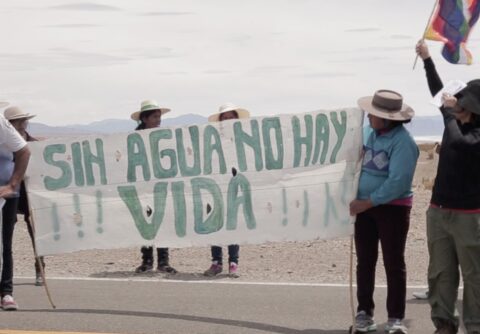
Rich in lithium but poor in water, traditional Andean communities want the world to recognise the pitfalls of surging demand for minerals vital to the global energy transition
Across the world, people hosting renewable energy projects are seeing few rewards. Advocates say a Belém Action Mechanism could make the green transition fairer
As importers face new costs under the Carbon Border Adjustment Mechanism, many are finding the biggest savings do not necessarily come from swapping to cleaner production
As the Iran war upends global energy markets, governments and consumers are cutting back – potentially locking in demand reductions that could lower the outlook for planet-heating emissions
Oil and gas blocks overlap with a fifth of forests in the Amazon, Congo Basin and SE Asia – policies are needed to transition away from fossil fuels and halt deforestation together
New UN-supported forum should challenge a global system that leaves many Global South nations with zero fiscal breathing space to navigate climate disasters and economic crises
Amid aid cuts, donor governments pledge less nature and climate funding to the Global Environment Facility (GEF), with the four-year package to be finalised in late May
Meeting the goal requires political will and a pathway that brings together efforts and drives implementation. An international roadmap can deliver this
Stay ahead with our unrivalled coverage
We provide experts and professionals around the world with the analysis and insight they need to navigate the biggest climate issues and negotiations.
To provide the best experiences, we use technologies like cookies to store and/or access device information. Consenting to these technologies will allow us to process data such as browsing behavior or unique IDs on this site. Not consenting or withdrawing consent, may adversely affect certain features and functions.
Functional
Always active
The technical storage or access is strictly necessary for the legitimate purpose of enabling the use of a specific service explicitly requested by the subscriber or user, or for the sole purpose of carrying out the transmission of a communication over an electronic communications network.
Preferences
The technical storage or access is necessary for the legitimate purpose of storing preferences that are not requested by the subscriber or user.
Statistics
The technical storage or access that is used exclusively for statistical purposes.The technical storage or access that is used exclusively for anonymous statistical purposes. Without a subpoena, voluntary compliance on the part of your Internet Service Provider, or additional records from a third party, information stored or retrieved for this purpose alone cannot usually be used to identify you.
Marketing
The technical storage or access is required to create user profiles to send advertising, or to track the user on a website or across several websites for similar marketing purposes.