• News ▾
    • Politics
    • Energy
    • Justice
    • Finance
    • Business
    • Science
    • Nature
    • Carbon markets
    • Explainers ▾
      • Clean energy transition
      • Sustainable Aviation Fuel
    • All news
  • Investigations
  • Series ▾
    • Clean Energy Frontier
    • Aviation’s Green Dream
  • Comment
  • About ▾
    • About
    • The team
    • Write for us
    • Advertising, partners and sponsorship
  • Contact
Sign In Subscribe Now
  • News ▾
    • Politics
    • Energy
    • Justice
    • Finance
    • Business
    • Science
    • Nature
    • Carbon markets
    • Explainers ▾
      • Clean energy transition
      • Sustainable Aviation Fuel
    • All news
  • Investigations
  • Series ▾
    • Clean Energy Frontier
    • Aviation’s Green Dream
  • Comment
  • About ▾
    • About
    • The team
    • Write for us
    • Advertising, partners and sponsorship
  • Contact
Sign In Subscribe Now
Partner Content
Nov 20, 2023 | Last Update: Sep 7, 2025
Sponsored

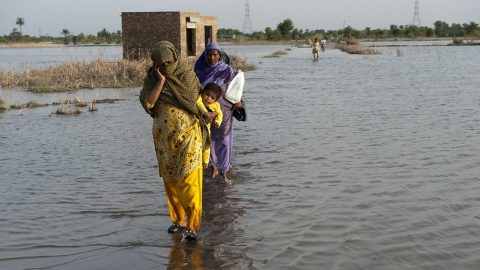
The subtle art of scaling up climate adaptation

Climate funds are the early adopters of a different way of doing finance. One which prioritises the climate, communities and the natural world.
The subtle art of scaling up climate adaptation
Credit: Adaptation Fund

Adam Wentworth

Author

Sponsored articles are produced by Climate Home News journalists with the support and collaboration of partners on topics of mutual interest.

Learn more
Share:
  • X (Twitter)
  • Facebook
  • LinkedIn
  • WhatsApp
  • Email

Green finance is one of the frontlines of the climate and nature crises.

Tens of trillions of dollars move through the global economy and financial markets each year. Finding a way to direct that money towards fighting climate change is one of the most pressing and urgent questions we face.

The Paris Agreement contains an important line on climate finance. It says that governments should “make financial flows consistent with a pathway towards low greenhouse gas emissions and climate-resilient development”.


Advertisement

If the world is to be successful in this objective then it would mean nothing less than a complete transformation of the financial sector as we currently understand it. But before that can be achieved there is also a huge amount of groundwork which needs to be laid.

Trailblazers

A variety of different climate funds have been set up to support the goals of the Paris Agreement. And even before the landmark deal was signed there existed funds which helped countries and communities build resilience to the climate crisis. These funds can be seen as the first movers, or early adopters, of a different way of doing finance. One which prioritises the climate, communities and the natural world.

The Adaptation Fund (AF) was established to protect vulnerable communities against the devastating impacts of climate change. Its pioneering approach is to create small-scale pilot projects which are innovative, impactful and can be scaled up elsewhere. By providing entities with direct access to finance from the Fund the work can be conducted quickly, something of great benefit when combating the urgency of the crisis.

Since 2010, AF has committed over US$1 billion across nearly 160 projects with an estimated 42 million people impacted. Its work has touched communities on almost every continent; from coastal erosion in Senegal to water management in the Maldives. Mahamat Abakar Assouyouti is a senior climate change specialist at the Fund. He comments that the scalability of financed projects “allows targeted and efficient use of resources, and ultimately an increased and long-lasting impact,” adding that scalability leads to economies of scale and “enables proof of concept”.

At the Fund’s heart is providing the space and opportunity to affect change where it is needed most, and to set an example for others to follow. This has been seen in the work of the Green Climate Fund (GCF), the world’s largest climate fund with over US$13.5 billion allocated across 240 projects.

Restoring mangroves

One of the clearest examples of scaling up innovation comes from the waterways of Andhra Pradesh in India. The state sits on India’s southern coast and is exposed to an increased number of cyclones and storm surges coming in from the Bay of Bengal. This causes coastal erosion, depleted fishing stocks, and ruined crops from saltwater intrusion. 


Advertisement

The AF project, funded through its pioneering direct access modality and carried out by its national implementing partner in India, NABARD, sought to combat the problem by restoring mangroves in the Krishna Delta. This would prevent sea-level rises and create a habitat for fish farming. The project used a small sum of US$0.7 million to restore degraded mangrove forests, train local people in the techniques, and create 50 hectares of an integrated fish farming system. The low-budget, innovative techniques, and successful outcomes provided a strong example to follow. The GCF did exactly that with a scaled-up, US$130 million project to protect mangroves and seagrass in 24 ecosystems across coastal districts in India.

Scaling up successful projects such as this one ultimately means more impact and reaching more vulnerable people. But taking a successful smaller project and widening its scope is not without its challenges. Each project is only as good as the support it receives from host countries and institutions, local communities, and the availability of financing. The more complex the project, the greater likelihood it will need extra support to ensure its sustainability in the long-term. 

Teaming up

For this reason, climate funds often work together to ensure effectiveness, and the Adaptation Fund and GCF have agreed on a framework to scale up projects. The relationship has been working well with the larger GCF involved in scaling up around 18 projects initially funded by AF. 

In addition to its concrete projects on the ground, the AF also recently started offering scale-up grants to help bridge the gap from completion of a project in preparations to scale it up.

The private sector and national governments should look at the example set by climate funds. Financing innovative projects on the ground and with direct local involvement is a proven recipe for lasting impact. As we seek to change the way the financial system operates, we need to have strong and actionable examples of how to do things differently. Climate funds offer one recipe which does exactly that.

This post was sponsored by the Adaptation Fund. See our supporters page for what this means.

Adam Wentworth is a freelance writer based in Brighton, UK.

TAGS:
adaptation, Adaptation Fund, Climate adapation, Climate finance, Green Finance, India

Benefit from more essential insight

Our unprecedented reporting provides experts and professionals globally with the analysis and insight they need to navigate the most important climate issues.

Trusted by the UN, World Bank, and governments around the world, sign up today and see why our award-winning coverage has been considered the authority for almost 15 years.

Essential

£0

A few top stories each week alongside our Climate Weekly newsletter.

Register for free
BEST VALUE

Premium

£130

per year

Unlimited access to our expert coverage alongside our Climate Weekly newsletter.

Subscribe today

Premium

£40

per quarter

Unlimited access to our expert coverage alongside our Climate Weekly newsletter. You can upgrade to an annual subscription at any time.

Subscribe today

Stories from the same category

  • Mar 30, 2026
    Sponsored

    Island nations fight to save cultural heritage from climate change

    The climate crisis is putting human heritage in the firing line. In response, small island states are learning how to adapt
    Read more
  • Mar 24, 2026
    Sponsored

    Early warning systems are saving lives in Central Asia

    Across Asia, the installation of early warning systems, alongside community involvement, is now viewed as a key response to the ever-present threat of climate disasters.
    Read more
  • Anabella Rosemberg of CAN International delivers the final intervention by environmental NGOs at the closing COP30 plenary
    Dec 10, 2025
    Sponsored

    How Belém launched the Just Transition mechanism

    COP30’s headline win – the creation of the first global Just Transition mechanism – did not materialise overnight. Born out of years of work, it flourished during two weeks of civil society alignment in one of the few negotiating tracks that gained momentum
    Read more
  • Nov 15, 2025
    Sponsored

    COP30: Spain’s unions say just transition means renewing communities beyond jobs

    Spain has made good progress in supporting workers to transition away from fossil fuels. But trade unions are pushing for stronger efforts to renew rural life
    Read more
  • Nov 13, 2025
    Energy

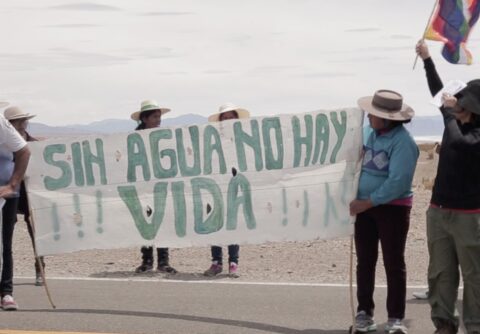
    “Water is worth more than lithium,” Indigenous Argentine community tells COP30

    Rich in lithium but poor in water, traditional Andean communities want the world to recognise the pitfalls of surging demand for minerals vital to the global energy transition
    Read more
  • Nov 9, 2025
    Sponsored

    A just transition for renewables: Why COP30 must put people before power

    Across the world, people hosting renewable energy projects are seeing few rewards. Advocates say a Belém Action Mechanism could make the green transition fairer
    Read more

    Other stories

    Apr 17, 2026
    Politics

    Q&A: Look beyond Trump for the full story on US climate action, says university dean

    Lawyer Lou Leonard, who leads the climate school at Clark University, says Washington’s attacks haven’t halted climate efforts across American society
    Read more
    Apr 16, 2026
    News

    US pressure puts World Bank’s climate plan at risk

    Closed-door talks over the World Bank’s climate agenda have stalled, as the US pushes to scrap green targets and expand support for fossil fuels
    Read more
    Apr 16, 2026
    Clean Energy Frontier

    As US and China seek rare earths, Brazilian lawmakers push for state-owned developer

    Pro-government lawmakers want Brazil to use mining for rare earths, key to many green technologies, to drive economic development
    Read more
    Apr 16, 2026
    Comment

    EU carbon tax risks penalising efficient producers over data gaps

    As importers face new costs under the Carbon Border Adjustment Mechanism, many are finding the biggest savings do not necessarily come from swapping to cleaner production
    Read more
    Apr 15, 2026
    News

    IEA slashes pre-war oil demand forecast by nearly a million barrels per day

    As the Iran war upends global energy markets, governments and consumers are cutting back – potentially locking in demand reductions that could lower the outlook for planet-heating emissions
    Read more
    COP16 confronts "huge" challenge of protecting 30% of world's land and sea
    Apr 15, 2026
    Comment

    Fossil Free Zones can be on-ramps to the clean energy transition

    Oil and gas blocks overlap with a fifth of forests in the Amazon, Congo Basin and SE Asia – policies are needed to transition away from fossil fuels and halt deforestation together
    Read more
    Apr 14, 2026
    Politics

    Türkiye sets COP31 dates and appoints Australian cattle farmer as youth champion

    In an open letter, Murat Kurum gives details of the October Pacific pre-COP and the November COP31 leaders’ summit in the Turkish city of Antalya
    Read more
    Apr 14, 2026
    Comment

    Broken debt system must be fixed to confront future climate shocks

    New UN-supported forum should challenge a global system that leaves many Global South nations with zero fiscal breathing space to navigate climate disasters and economic crises
    Read more
    Petrus Asuy sow forest crops seed in his nursery in Muara Tae Village, East Kalimantan Province of Indonesia on September 2015. The crops would be planted in the intact forest as part of community reforestation. Of their original 11.000 hectares of land, only 400 hectares can survive when the rest were destroyed by palm oil plantations and coal mining. In 2015, United Nations awarded Equator Prize to Muara Tae Community to recognize their effort in protecting ancestral forest. Agriculture and agroforestry are the primary income for indigenous people in Indonesia. Forest and agriculture land conversion for monoculture plantations and coal mining have threaten the indigenous communities. When the threat become rampant, indigenous people believe that planting trees and farming are considered as an act to protect their land.
    Apr 10, 2026
    News

    GEF raises $3.9bn ahead of funding deadline, $1bn below previous budget

    Amid aid cuts, donor governments pledge less nature and climate funding to the Global Environment Facility (GEF), with the four-year package to be finalised in late May
    Read more
    An aerial view of a deforested zone in "Ñembi Guasu" conservation area, in Bolivia.
    Apr 10, 2026
    Comment

    How a global roadmap can meet the promise to halt deforestation

    Meeting the goal requires political will and a pathway that brings together efforts and drives implementation. An international roadmap can deliver this
    Read more
    Climate Home News is an award-winning independent digital publication reporting on the international politics of the climate crisis.

    • News
    • Clean Energy Frontier
    • Investigations
    • Comment
    • Sponsored
    • Explainers
    • Subscribe at Climate Home News
    • Advertising, partners and sponsorship
    • Contact us
    • Privacy policy
    • Cookie Policy
    • Terms of Use
    DESIGNED BY SPOOVIO | DEVELOPED BY XT

    Stay ahead with our unrivalled coverage

    We provide experts and professionals around the world with the analysis and insight they need to navigate the biggest climate issues and negotiations.

    Sign Up

    Sign up today to gain immediate access.

    Login

    Login if you already have an account.

    Manage Cookie Consent
    To provide the best experiences, we use technologies like cookies to store and/or access device information. Consenting to these technologies will allow us to process data such as browsing behavior or unique IDs on this site. Not consenting or withdrawing consent, may adversely affect certain features and functions.
    Functional Always active
    The technical storage or access is strictly necessary for the legitimate purpose of enabling the use of a specific service explicitly requested by the subscriber or user, or for the sole purpose of carrying out the transmission of a communication over an electronic communications network.
    Preferences
    The technical storage or access is necessary for the legitimate purpose of storing preferences that are not requested by the subscriber or user.
    Statistics
    The technical storage or access that is used exclusively for statistical purposes. The technical storage or access that is used exclusively for anonymous statistical purposes. Without a subpoena, voluntary compliance on the part of your Internet Service Provider, or additional records from a third party, information stored or retrieved for this purpose alone cannot usually be used to identify you.
    Marketing
    The technical storage or access is required to create user profiles to send advertising, or to track the user on a website or across several websites for similar marketing purposes.
    • Manage options
    • Manage services
    • Manage {vendor_count} vendors
    • Read more about these purposes
    View preferences
    • {title}
    • {title}
    • {title}