• News ▾
    • Politics
    • Energy
    • Justice
    • Finance
    • Business
    • Science
    • Nature
    • Carbon markets
    • Explainers ▾
      • Clean energy transition
      • Sustainable Aviation Fuel
    • All news
  • Investigations
  • Series ▾
    • Clean Energy Frontier
    • Aviation’s Green Dream
  • Comment
  • About ▾
    • About
    • The team
    • Write for us
    • Advertising, partners and sponsorship
  • Contact
Sign In Subscribe Now
  • News ▾
    • Politics
    • Energy
    • Justice
    • Finance
    • Business
    • Science
    • Nature
    • Carbon markets
    • Explainers ▾
      • Clean energy transition
      • Sustainable Aviation Fuel
    • All news
  • Investigations
  • Series ▾
    • Clean Energy Frontier
    • Aviation’s Green Dream
  • Comment
  • About ▾
    • About
    • The team
    • Write for us
    • Advertising, partners and sponsorship
  • Contact
Sign In Subscribe Now
Partner Content
Dec 8, 2023 | Last Update: Sep 7, 2025
Sponsored

As climate disasters grow, early warning systems become essential

The Adaptation Fund is supporting the UN goal to have early warning systems for everyone on the planet by 2027, which will save lives
man on boat in the Amazon
Unsplash: Alev Takil

Adam Wentworth

Author

Sponsored articles are produced by Climate Home News journalists with the support and collaboration of partners on topics of mutual interest.

Learn more
Share:
  • X (Twitter)
  • Facebook
  • LinkedIn
  • WhatsApp
  • Email

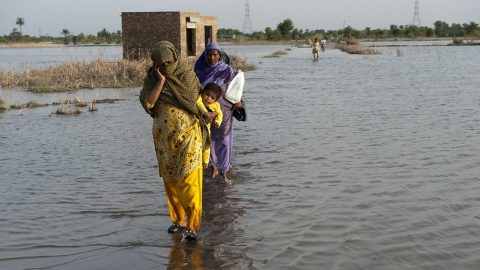
The more the world waits to cut carbon emissions, the greater the price on people and planet. This simple fact is borne out by the huge increase in the number of climate-related disasters over the past two decades.

Research from the UN Office for Disaster Risk Reduction (UNDRR) found that between 2000 and 2019, there were almost twice as many climate-related disasters as during the previous 20 years. The number of major floods, for example, doubled from 1,389 to 3,254. These disasters are being fuelled by the world’s toxic love affair with carbon.

There was a time in which people discussed what the impacts of climate change might be on our children or grandchildren. It is clear that the pace of change is happening right here and now. As the planet continues to warm we have to accept that an increased number of climate-related disasters is inevitable, despite what progress is made between now and 2050.


Advertisement

Tried and tested

But accepting their occurrence doesn’t mean we can’t do anything about it. There exists a tried and tested approach to tackling the growth in climate disasters. One of the main solutions is to set up an effective early warning system (EWS). This simple concept has proven so popular that the UN has set a target for every person on the planet to be covered by an EWS by 2027.  “The evidence is clear: early warning systems are one of the most effective risk reduction and climate adaptation measures to reduce disaster mortality and economic losses,” the UN Secretary-General, António Guterres, recently commented.

The Adaptation Fund was created to support communities against the impacts of climate change. Disaster risk reduction coupled with early warning systems now account for around 18% of all the projects it funds. To date it has helped install 526 early warning systems across all continents, at the local, national and regional levels.

Mikko Ollikainen, who heads up the fund, recently commented that  “many of our projects are helping to reduce and avert further loss and damage,” adding that “the fund is committed to supporting developing countries to build resilience to climate disasters. With the global urgency for adaptation expressed in recent international reports, such as the UNEP Adaptation Gap Report, we must accelerate and scale up our collective adaptation activities, including DRR/EWS. We have seen several instances where Adaptation Fund projects were successfully scaled up to create transformational DRR/EWS systems in countries.”

On the ground

Among the many projects which are now building out early warning systems, one in Colombia stands out. This small-scale, innovative example shows the benefits of a tailored approach working closely with local people. The La Mojana region in northern Colombia is an area of around 500,000 hectares, rich in wetlands and biodiversity. But it is also incredibly vulnerable to climate impacts and has frequently experienced bouts of severe flooding and drought.

Funded by the Adaptation Fund and carried out by the UN Development Programme together with the Colombian government, the project aimed to protect and strengthen local communities to future climate impacts. It managed to achieve this, in part, through creating stronger flood infrastructure, restoring damaged wetland areas, and the creation of an early warning system. A hydro-meteorological forecast and alert centre was created to monitor water levels, map flood threats, and provide safe evacuation routes. This provided 100% coverage for thousands of people in the affected regions, up from zero a few years earlier.

Heed the lessons

Juana Madariaga, a restoration expert, told UNDP that: “We learned about everything. We received a lot of training and finally we were able to move this project forward…now we are supporting other communities in doing the same thing.” The success has been taken forward by the Green Climate Fund which has greatly scaled up the funding and coverage of the EWS to the wider region.


Advertisement

A recent study by AF concluded that the most successful disaster risk reduction projects shared many of the same characteristics. These include leading with the community, empowering women and indigenous groups to design the campaign, and ensuring strong involvement from regional and national institutions. In addition, strong investment in data collection and improving data quality is essential to ensuring long-term sustainability and effectiveness.

These ideas may seem straightforward on paper but each region is unique. When it comes to disaster risk the value comes through forming lasting partnerships, a willingness to learn, and an understanding of local concerns. If the number of climate disasters only continues to grow as expected, we will need to heed these lessons and fast. Because if we cannot prevent disasters from happening, we have to learn to adapt, build resilience and reduce climate change risks.

This post was sponsored by the Adaptation Fund. See our supporters page for what this means.

Adam Wentworth is a freelance writer based in Brighton, UK.

TAGS:
adaptation, Adaptation Fund, Climate Disasters, Disaster Risk Reduction

Benefit from more essential insight

Our unprecedented reporting provides experts and professionals globally with the analysis and insight they need to navigate the most important climate issues.

Trusted by the UN, World Bank, and governments around the world, sign up today and see why our award-winning coverage has been considered the authority for almost 15 years.

Essential

£0

A few top stories each week alongside our Climate Weekly newsletter.

Register for free
BEST VALUE

Premium

£130

per year

Unlimited access to our expert coverage alongside our Climate Weekly newsletter.

Subscribe today

Premium

£40

per quarter

Unlimited access to our expert coverage alongside our Climate Weekly newsletter. You can upgrade to an annual subscription at any time.

Subscribe today

Stories from the same category

  • Mar 30, 2026
    Sponsored

    Island nations fight to save cultural heritage from climate change

    The climate crisis is putting human heritage in the firing line. In response, small island states are learning how to adapt
    Read more
  • Mar 24, 2026
    Sponsored

    Early warning systems are saving lives in Central Asia

    Across Asia, the installation of early warning systems, alongside community involvement, is now viewed as a key response to the ever-present threat of climate disasters.
    Read more
  • Anabella Rosemberg of CAN International delivers the final intervention by environmental NGOs at the closing COP30 plenary
    Dec 10, 2025
    Sponsored

    How Belém launched the Just Transition mechanism

    COP30’s headline win – the creation of the first global Just Transition mechanism – did not materialise overnight. Born out of years of work, it flourished during two weeks of civil society alignment in one of the few negotiating tracks that gained momentum
    Read more
  • Nov 15, 2025
    Sponsored

    COP30: Spain’s unions say just transition means renewing communities beyond jobs

    Spain has made good progress in supporting workers to transition away from fossil fuels. But trade unions are pushing for stronger efforts to renew rural life
    Read more
  • Nov 13, 2025
    Energy

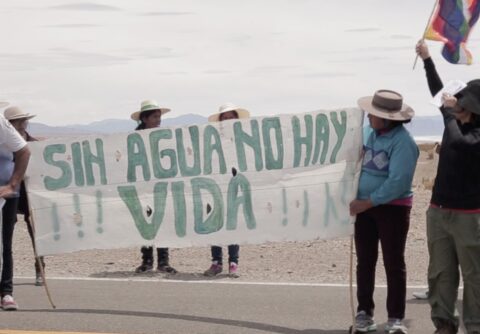
    “Water is worth more than lithium,” Indigenous Argentine community tells COP30

    Rich in lithium but poor in water, traditional Andean communities want the world to recognise the pitfalls of surging demand for minerals vital to the global energy transition
    Read more
  • Nov 9, 2025
    Sponsored

    A just transition for renewables: Why COP30 must put people before power

    Across the world, people hosting renewable energy projects are seeing few rewards. Advocates say a Belém Action Mechanism could make the green transition fairer
    Read more

    Other stories

    Apr 17, 2026
    Politics

    Q&A: Look beyond Trump for the full story on US climate action, says university dean

    Lawyer Lou Leonard, who leads the climate school at Clark University, says Washington’s attacks haven’t halted climate efforts across American society
    Read more
    Apr 16, 2026
    News

    US pressure puts World Bank’s climate plan at risk

    Closed-door talks over the World Bank’s climate agenda have stalled, as the US pushes to scrap green targets and expand support for fossil fuels
    Read more
    Apr 16, 2026
    Clean Energy Frontier

    As US and China seek rare earths, Brazilian lawmakers push for state-owned developer

    Pro-government lawmakers want Brazil to use mining for rare earths, key to many green technologies, to drive economic development
    Read more
    Apr 16, 2026
    Comment

    EU carbon tax risks penalising efficient producers over data gaps

    As importers face new costs under the Carbon Border Adjustment Mechanism, many are finding the biggest savings do not necessarily come from swapping to cleaner production
    Read more
    Apr 15, 2026
    News

    IEA slashes pre-war oil demand forecast by nearly a million barrels per day

    As the Iran war upends global energy markets, governments and consumers are cutting back – potentially locking in demand reductions that could lower the outlook for planet-heating emissions
    Read more
    COP16 confronts "huge" challenge of protecting 30% of world's land and sea
    Apr 15, 2026
    Comment

    Fossil Free Zones can be on-ramps to the clean energy transition

    Oil and gas blocks overlap with a fifth of forests in the Amazon, Congo Basin and SE Asia – policies are needed to transition away from fossil fuels and halt deforestation together
    Read more
    Apr 14, 2026
    Politics

    Türkiye sets COP31 dates and appoints Australian cattle farmer as youth champion

    In an open letter, Murat Kurum gives details of the October Pacific pre-COP and the November COP31 leaders’ summit in the Turkish city of Antalya
    Read more
    Apr 14, 2026
    Comment

    Broken debt system must be fixed to confront future climate shocks

    New UN-supported forum should challenge a global system that leaves many Global South nations with zero fiscal breathing space to navigate climate disasters and economic crises
    Read more
    Petrus Asuy sow forest crops seed in his nursery in Muara Tae Village, East Kalimantan Province of Indonesia on September 2015. The crops would be planted in the intact forest as part of community reforestation. Of their original 11.000 hectares of land, only 400 hectares can survive when the rest were destroyed by palm oil plantations and coal mining. In 2015, United Nations awarded Equator Prize to Muara Tae Community to recognize their effort in protecting ancestral forest. Agriculture and agroforestry are the primary income for indigenous people in Indonesia. Forest and agriculture land conversion for monoculture plantations and coal mining have threaten the indigenous communities. When the threat become rampant, indigenous people believe that planting trees and farming are considered as an act to protect their land.
    Apr 10, 2026
    News

    GEF raises $3.9bn ahead of funding deadline, $1bn below previous budget

    Amid aid cuts, donor governments pledge less nature and climate funding to the Global Environment Facility (GEF), with the four-year package to be finalised in late May
    Read more
    An aerial view of a deforested zone in "Ñembi Guasu" conservation area, in Bolivia.
    Apr 10, 2026
    Comment

    How a global roadmap can meet the promise to halt deforestation

    Meeting the goal requires political will and a pathway that brings together efforts and drives implementation. An international roadmap can deliver this
    Read more
    Climate Home News is an award-winning independent digital publication reporting on the international politics of the climate crisis.

    • News
    • Clean Energy Frontier
    • Investigations
    • Comment
    • Sponsored
    • Explainers
    • Subscribe at Climate Home News
    • Advertising, partners and sponsorship
    • Contact us
    • Privacy policy
    • Cookie Policy
    • Terms of Use
    DESIGNED BY SPOOVIO | DEVELOPED BY XT

    Stay ahead with our unrivalled coverage

    We provide experts and professionals around the world with the analysis and insight they need to navigate the biggest climate issues and negotiations.

    Sign Up

    Sign up today to gain immediate access.

    Login

    Login if you already have an account.

    Manage Cookie Consent
    To provide the best experiences, we use technologies like cookies to store and/or access device information. Consenting to these technologies will allow us to process data such as browsing behavior or unique IDs on this site. Not consenting or withdrawing consent, may adversely affect certain features and functions.
    Functional Always active
    The technical storage or access is strictly necessary for the legitimate purpose of enabling the use of a specific service explicitly requested by the subscriber or user, or for the sole purpose of carrying out the transmission of a communication over an electronic communications network.
    Preferences
    The technical storage or access is necessary for the legitimate purpose of storing preferences that are not requested by the subscriber or user.
    Statistics
    The technical storage or access that is used exclusively for statistical purposes. The technical storage or access that is used exclusively for anonymous statistical purposes. Without a subpoena, voluntary compliance on the part of your Internet Service Provider, or additional records from a third party, information stored or retrieved for this purpose alone cannot usually be used to identify you.
    Marketing
    The technical storage or access is required to create user profiles to send advertising, or to track the user on a website or across several websites for similar marketing purposes.
    • Manage options
    • Manage services
    • Manage {vendor_count} vendors
    • Read more about these purposes
    View preferences
    • {title}
    • {title}
    • {title}