Chocolate isn’t just a sweet treat – it’s a global industry worth over $100 billion per year and a crucial lifeline for millions of farmers in developing countries who grow its main ingredient: cocoa beans.
But recent price spikes mean the commodity has become a flashpoint for wider concerns about the impact of climate change on agriculture and the need to shift to more sustainable farming.
For such a widely consumed product, the cocoa bean requires a surprisingly unique set of conditions in which to grow. Cocoa trees only survive within a belt 20 degrees north or south of the Equator and at an altitude with a consistent, humid climate and plenty of rain.
Advertisement
Around 50 countries meet these exacting conditions, and they account for the vast majority of all cocoa production. West Africa, in particular, is a hotspot, with Ghana and Ivory Coast producing 60-70% of all the world’s cocoa.
“Smallholder cocoa farmers in West Africa are the backbone of the chocolate industry, yet they remain at the losing end of the supply chain,” said Ghana-based Kwame Osei, senior director for global programmes at the Rainforest Alliance, an international nonprofit that works to protect forests through responsible business.
The price of cocoa has skyrocketed as a result of intense heat and rainfall in West Africa, which has greatly reduced crop yields, as shown in data by the International Cocoa Organization.
While the rise in cocoa prices might seem like good news for farmers in the region, Osei noted that they receive on average only 6% of a chocolate bar’s retail price. In recent years, they have struggled with the impacts of climate change, to which their crop is highly susceptible.
The price per tonne for cocoa on the futures market has doubled since the start of the year, reaching over $10,000 for the first time. In the longer term, higher prices could boost farmers’ incomes, experts say – if the right policies are put in place.
Both Ghana and Ivory Coast have recently increased the fixed price producers receive for their crop before export by over 50%, albeit from a low base. But long-term changes are needed for the industry to go green, sector experts told Climate Home.
Advertisement
Currently, the risk is that market volatility linked to extreme weather could drive money away from the sector. Companies seeking to develop cocoa alternatives, for example, have attracted investment of $51 million since the start of 2023, according to recent research from data firm New Food Finance.
Boamah Sonkaa, a cocoa farmer, visits his cocoa farm near the village of Kusa, in the Ashanti region of Ghana, August 27, 2022. (Photo: Francis Kokoroko/Reuters)
Boamah Sonkaa, a cocoa farmer, visits his cocoa farm near the village of Kusa, in the Ashanti region of Ghana, August 27, 2022. (Photo: Francis Kokoroko/Reuters)
Wrong incentives
The upheaval in the market has highlighted the need to adapt cocoa production to a warming world while at the same time reducing the industry’s environmental impacts. Current incentives enable deforestation and water depletion – and need to be changed to support greener practices, the experts said.
Subsidies come in different forms – whether as direct payments and tax breaks, or indirectly through external social and economic impacts. Both types of subsidy combined exceeded $7 trillion in 2023, covering fossil fuels, agriculture and fisheries, according to a 2023 World Bank Report.
Direct subsidies for the agricultural sector add up to $635 billion a year, it notes. They mainly support the use of fossil fuel-based fertilisers and intensive cultivation of cash crops for export, which are contributing to rising emissions of planet-heating gases.
In the case of cocoa, the report suggests that in Ivory Coast, increasing subsidies to the industry drove deforestation, as farmers cleared more land to grow trees along the border between Ivory Coast and Ghana. The analysis shows that, between 2000 and 2010, agricultural subsidies were 56% higher in Ivory Coast than in Ghana, translating into a 3% higher deforestation rate.
Data released this month by Trase, a non-profit initiative tracking commodities, also finds persistently high rates of deforestation in the region. Researchers calculated that between 2003 and 2017, 1.65 million hectares of tropical rainforest in Ivory Coast was lost to cocoa production. That is an average of 110,000 hectares per year – about the size of New York City.
In a bid to rein in forest losses, both Ivory Coast and Ghana are now taking steps to make their key industry more sustainable – and to protect producers against the growing impacts of the climate crisis. This includes shifting subsidies to promote greener methods of production.
Investing in farmers
Reforming subsidies is not only about removing harmful incentives, but also redirecting subsidies and taxes to support regenerative agriculture, said Osei of the Rainforest Alliance.
Poorly designed policies that are seen as unfair to producers can easily escalate into major political problems. This has occurred in European countries where farmers have taken to the streets this year to protest new green rules and the removal of subsidies for diesel.
The world’s food producers need financial and technical support – especially in poorer developing nations – to swap their old practices for newer, more eco-friendly methods, experts say.
“Decades of lack of investment in the farmers who grow our cocoa means they do not have the resources to invest in mitigation,” said Surmaya Talyarkhan, a senior sustainable sourcing manager for cocoa at the Fairtrade Foundation.
She believes the solution lies in ensuring farmers receive a stable price for their crop, allowing them to earn a living income. “Only then will farmers have the financial headroom to invest in measures to manage climate change and other challenges,” she told Climate Home.
To shift the cocoa industry in a greener direction, the Rainforest Alliance recommends taxing chemical fertilisers and pesticides, and ending mono-cropping practices which can harm soil health and biodiversity.
It says subsidies should instead be provided for practices that improve soil conditions and local ecosystems, including growing cover crops that maintain soil nutrition over the winter months, and shade trees to protect seedlings from harsh weather.
“Better farming techniques, like regenerative agriculture, can help farmers improve soil health and productivity while also expanding their sources of income – ultimately making them more resilient to the impacts of climate change,” said Kerry Daroci, cocoa sector lead at the Rainforest Alliance.
Mahama Ousmanu, 58, a farmer, works on a rehabilitated cocoa farm in Kwabeng in the Eastern Region, Ghana, February 28, 2024. (Photo: Francis Kokoroko/Reuters)
Mahama Ousmanu, 58, a farmer, works on a rehabilitated cocoa farm in Kwabeng in the Eastern Region, Ghana, February 28, 2024. (Photo: Francis Kokoroko/Reuters)
EU cocoa pact
In 2022, Ivory Coast and Ghana signed a joint agreement with the European Union, called the Alliance on Sustainable Cocoa, which commits them to a government-led system of transparency and traceability to curb deforestation linked to the industry.
This includes detailed monitoring and data collection on cocoa production in high-risk areas, with the information made publicly available to boost knowledge of what is driving the problem. The project is being supported with upwards of 25 million euros ($27 million) from the EU – a drop in the subsidy ocean.
When the alliance was launched, EU trade commissioner Valdis Dombrovskis said that the EU – as the world’s largest importer of cocoa – had a duty to act on deforestation. “Together with our African partners, we have built a movement for positive change that can benefit everyone: farmers, industry, traders and consumers alike,” he added in a press statement.
The importance of such partnerships is borne out by the latest Trase data which shows that, in 2021, the EU and Switzerland combined imported 1.1 million tonnes of cocoa products from Ivory Coast, associated with 800,000 hectares of tropical deforestation.
The cocoa alliance preceded the EU’s landmark deforestation law – coming into force in less than a year’s time – which could pose a challenge for smallholders. Cocoa is one of the seven high-risk commodities targeted by the regulation, with farmers required to provide evidence that their produce is free from deforestation.
Meanwhile, the European Commission sees high cocoa prices as an opportunity to boost sustainability in the sector, as long as farmers benefit directly.
A commission spokesperson told Climate Home that farmers need to receive a living income that will “allow for the necessary investments”, such as agroforestry practices that support soil fertility in tropical environments.
“Investments in agricultural research and technical assistance could increase the adoption of such practices even further,” the spokesperson added. Other support could be made available to help ensure fair labour practices, incentivise environmentally sound methods, and build resilience.
Power from cocoa waste
The two West African cocoa powerhouses are already rolling out programmes to make their cultivation more sustainable. Ghana is implementing a climate-smart programme covering over six million hectares of the West Guinean forest. It includes practices such as growing shade trees to improve crop yields and is expected to earn the country $45 million by the end of 2024 in carbon credits via the World Bank.
Meanwhile, Ivory Coast is building a major new biomass power plant to run on the enormous amounts of waste that come from harvesting cocoa. Usually, much of the plant – the shells and pod husks – is thrown away, but these will now be used to generate renewable electricity instead.
Osei of the Rainforest Alliance noted that smallholders produce around 30 percent of the world’s food crops – and it is therefore in the interest of governments to help them become more resilient to climate change, to maintain supplies and export capacity.
This must be done in a way that protects the climate and improves the health of soils, forests and wider ecosystems on which the cocoa crop depends, he added.
“Regenerative agriculture holds huge potential to transform food systems and respond to some of the most pressing challenges governments and farmers are grappling with, such as climate change, biodiversity loss, food insecurity, and water scarcity,” he said.
(Reporting by Adam Wentworth; editing by Megan Rowling and Sebastián Rodríguez; graphics by Fanis Kollias)
This story is supported by Unilever. Special reports are produced by Climate Home News journalists with the support of partners on topics of mutual interest. Partners do not review the copy before publication.
Our unprecedented reporting provides experts and professionals globally with the analysis and insight they need to navigate the most important climate issues.
Trusted by the UN, World Bank, and governments around the world, sign up today and see why our award-winning coverage has been considered the authority for almost 15 years.
Essential
£0
A few top stories each week alongside our Climate Weekly newsletter.
Across Asia, the installation of early warning systems, alongside community involvement, is now viewed as a key response to the ever-present threat of climate disasters.
COP30’s headline win – the creation of the first global Just Transition mechanism – did not materialise overnight. Born out of years of work, it flourished during two weeks of civil society alignment in one of the few negotiating tracks that gained momentum
Spain has made good progress in supporting workers to transition away from fossil fuels. But trade unions are pushing for stronger efforts to renew rural life
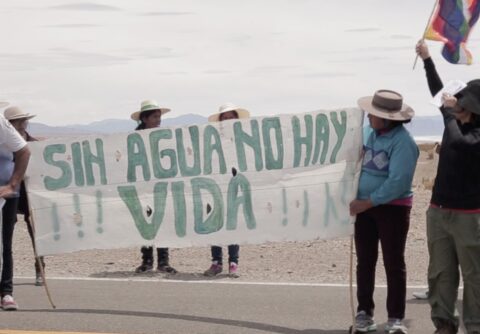
Rich in lithium but poor in water, traditional Andean communities want the world to recognise the pitfalls of surging demand for minerals vital to the global energy transition
Across the world, people hosting renewable energy projects are seeing few rewards. Advocates say a Belém Action Mechanism could make the green transition fairer
As importers face new costs under the Carbon Border Adjustment Mechanism, many are finding the biggest savings do not necessarily come from swapping to cleaner production
As the Iran war upends global energy markets, governments and consumers are cutting back – potentially locking in demand reductions that could lower the outlook for planet-heating emissions
Oil and gas blocks overlap with a fifth of forests in the Amazon, Congo Basin and SE Asia – policies are needed to transition away from fossil fuels and halt deforestation together
New UN-supported forum should challenge a global system that leaves many Global South nations with zero fiscal breathing space to navigate climate disasters and economic crises
Amid aid cuts, donor governments pledge less nature and climate funding to the Global Environment Facility (GEF), with the four-year package to be finalised in late May
Meeting the goal requires political will and a pathway that brings together efforts and drives implementation. An international roadmap can deliver this
Stay ahead with our unrivalled coverage
We provide experts and professionals around the world with the analysis and insight they need to navigate the biggest climate issues and negotiations.
To provide the best experiences, we use technologies like cookies to store and/or access device information. Consenting to these technologies will allow us to process data such as browsing behavior or unique IDs on this site. Not consenting or withdrawing consent, may adversely affect certain features and functions.
Functional
Always active
The technical storage or access is strictly necessary for the legitimate purpose of enabling the use of a specific service explicitly requested by the subscriber or user, or for the sole purpose of carrying out the transmission of a communication over an electronic communications network.
Preferences
The technical storage or access is necessary for the legitimate purpose of storing preferences that are not requested by the subscriber or user.
Statistics
The technical storage or access that is used exclusively for statistical purposes.The technical storage or access that is used exclusively for anonymous statistical purposes. Without a subpoena, voluntary compliance on the part of your Internet Service Provider, or additional records from a third party, information stored or retrieved for this purpose alone cannot usually be used to identify you.
Marketing
The technical storage or access is required to create user profiles to send advertising, or to track the user on a website or across several websites for similar marketing purposes.